

OET Medical Vocabulary, Word of the Day
Gingiva (Gums) – Meaning and Usage in Medical English
Nov
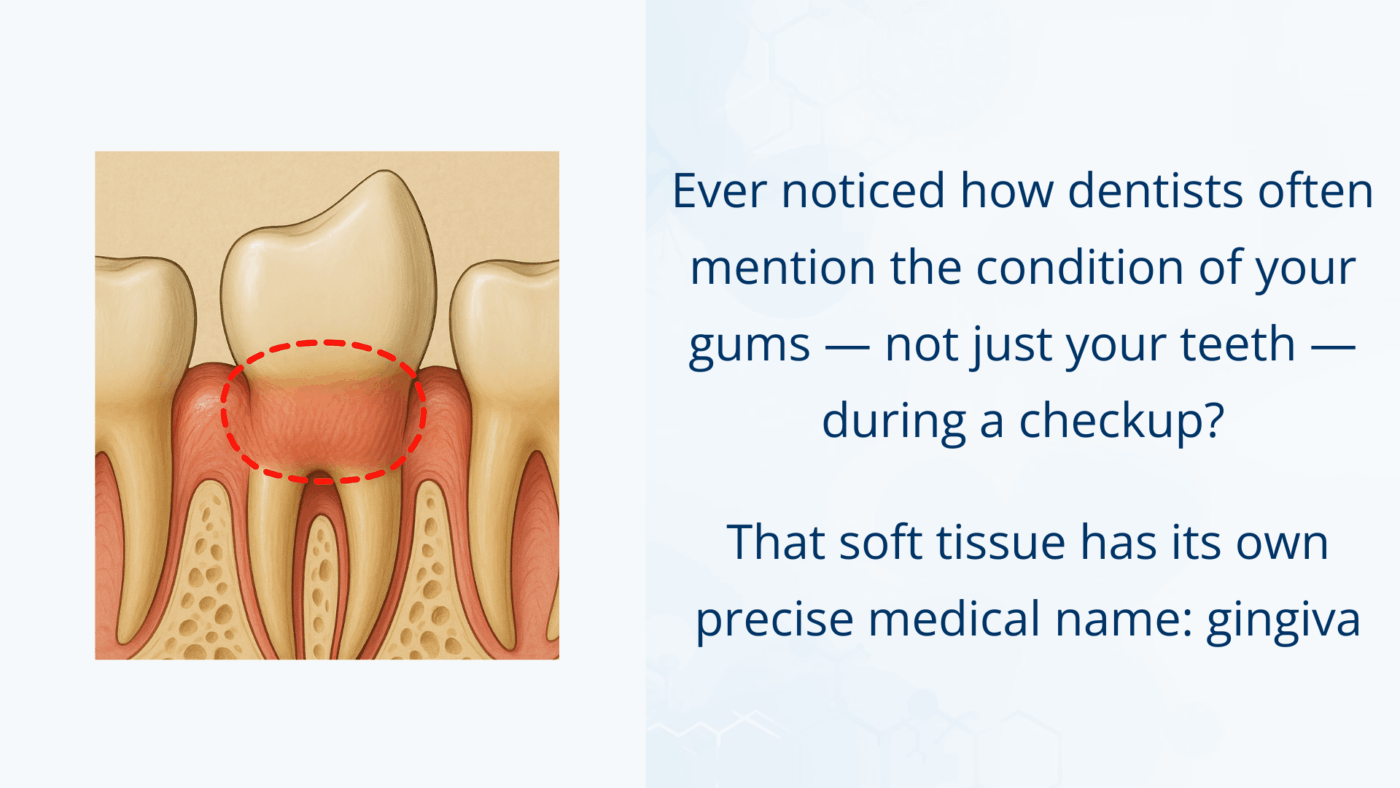
Gingiva is the medical term for the gums: the firm pink soft tissue that surrounds the teeth and covers the jawbone.
👁 What Does “Gingiva” Mean?
Gingiva refers to the soft tissue that surrounds and supports the teeth, more commonly known as the gums.
The word comes from Latin gingiva, meaning “gum” or “mucous tissue of the mouth.”
It forms the part of the oral mucosa that tightly adheres to the teeth and the underlying bone, helping protect deeper structures from infection and trauma.
🔍 Clinical Usage
In clinical communication, gingiva appears frequently in dental and medical contexts.
Dentists and doctors may describe its color, texture, and contour to assess oral health.
For example, “gingival margin,” “attached gingiva,” and “receding gingiva” are common terms used in patient notes or reports.
You might also find it in patient education materials or discharge summaries, especially when discussing oral hygiene or periodontal health.
Example:
“Recession of the gingiva was noted around the lower incisors.”
→ The gums have pulled away slightly from the teeth, exposing the roots.
Try OET Practice Questions for Free
Exam-style questions with every answer explained.
Listening · Reading · Writing · Speaking — No sign-up needed
🎥 Watch the Short Video
👉 Watch our 30-second clip: Gingiva – Learn how to pronounce it and remember how it’s used in real medical English.
🔗 Related Words
Browse every term in our Medical English Body Parts A–Z guide.
For the clinical words you will meet in the OET, with what to say to patients, see our OET Vocabulary guide.