

OET Medical Vocabulary, Word of the Day
Costovertebral Angle (Renal Angle) – Meaning and Usage in Medical English

Nov
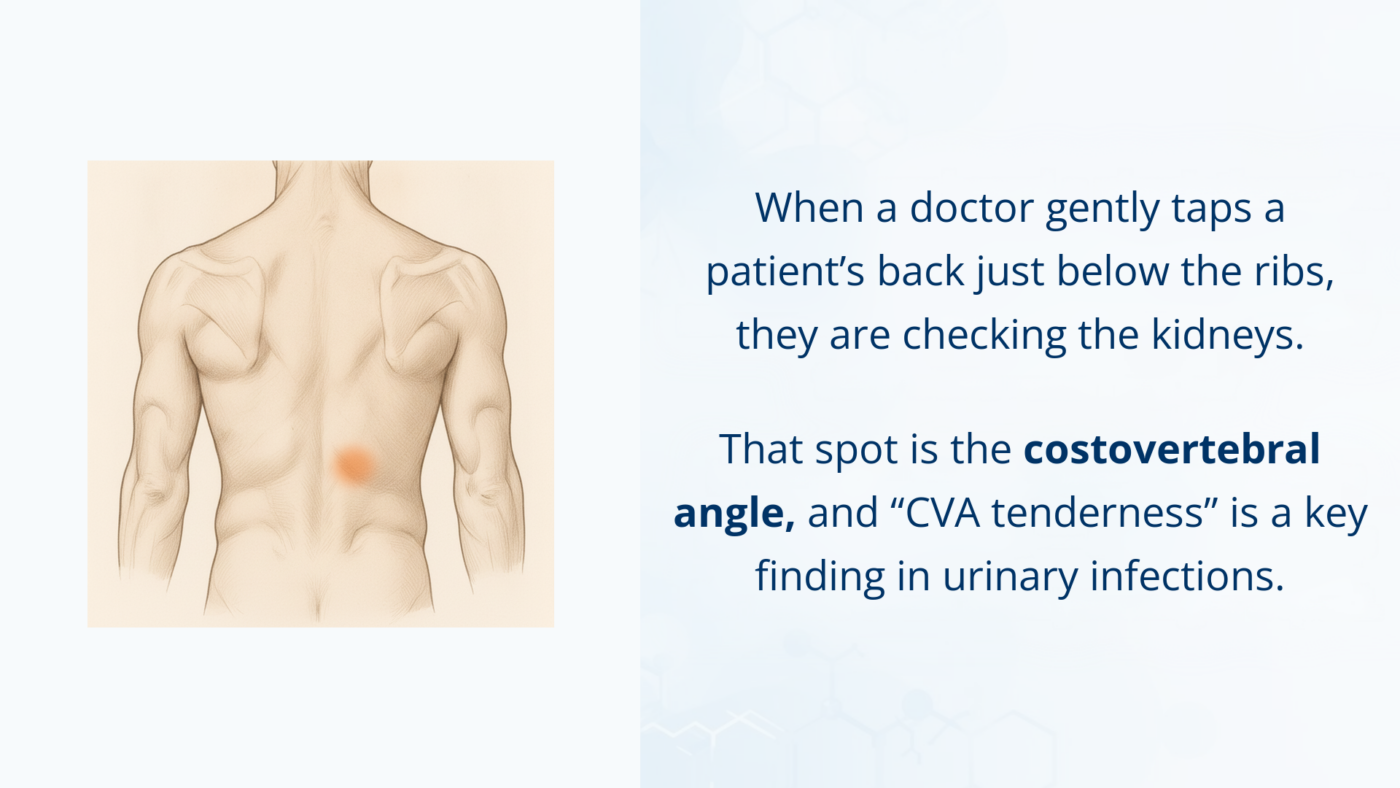
👁 What Does “Costovertebral Angle” Mean?
The costovertebral angle is the area on each side of the back where the lowest rib meets the spine. The kidney lies just beneath it, so pain or tenderness here often points to kidney disease. In British notes it is usually called the renal angle.
Costo- comes from Latin costa, “rib”, and vertebral from vertebra, a bone of the spine. The plural is costovertebral angles, and the abbreviation is CVA.
🔍 Clinical Usage
The costovertebral angle appears in emergency, urology and general medicine notes:
- pyelonephritis — kidney infection, typically with fever and CVA tenderness
- renal colic — severe pain from a kidney stone, often starting at the renal angle
- CVA tenderness — pain when the area is pressed or tapped
- loin pain — British term for pain in this region and the flank
Common collocations include:
- costovertebral angle tenderness
- renal angle tenderness
- right / left CVA
- pain radiating from loin to groin
Here’s a natural clinical example:
“Febrile with right CVA tenderness and dysuria; urine sent for culture.”
→ Meaning: The patient has a fever, pain when the right side of the back below the ribs is pressed, and pain on passing urine, so a urine test has been sent.
Try OET Practice Questions for Free
Exam-style questions with every answer explained.
Listening · Reading · Writing · Speaking — No sign-up needed
🗣 Pronunciation
kos-toh-VUR-tuh-brul ANG-gul — stress VUR.
💡 OET Tip
With patients, say your back, just below the ribs. In writing, CVA tenderness or renal angle tenderness is standard. Be careful: CVA also means cerebrovascular accident (stroke), so write the full term once before using the abbreviation.
🔗 Related Words
Browse every term in our Medical English Body Parts A–Z guide.
For the clinical words you will meet in the OET, with what to say to patients, see our OET Vocabulary guide.