

OET Medical Vocabulary, Word of the Day
Throat (Pharynx) – Meaning and Usage in Medical English

Nov
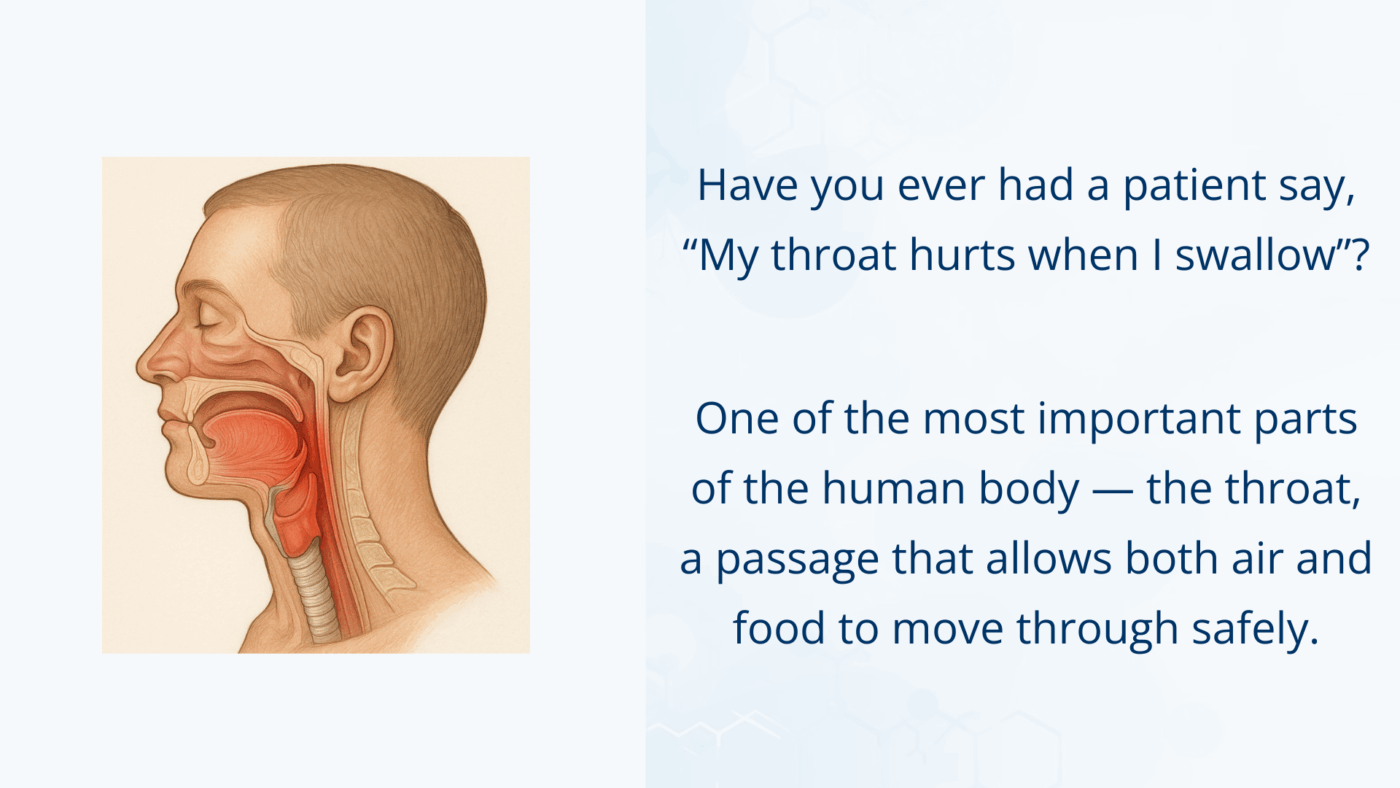
The throat (medical term: pharynx) is the passage behind the mouth and nose that leads to the esophagus and the trachea.
👁 What Does “Throat” Mean?
The throat refers to the passage that connects the mouth and nose to the esophagus and trachea.
The word comes from Old English þrote, meaning “neck” or “gullet,” and is widely used in both everyday and clinical English.
Anatomically, it includes the pharynx and larynx, which play key roles in swallowing, breathing, and speaking.
When healthcare professionals mention the “throat,” they’re often referring to the pharyngeal region, which is frequently examined in cases of infection or pain.
🔍 Clinical Usage
In medical communication, “throat” is one of the most common words heard during consultations — especially in primary care and ENT (Ear, Nose, and Throat) settings.
Doctors and nurses might document symptoms such as sore throat, redness, swelling, or tonsillar exudate.
You’ll also find the word used in patient notes and diagnostic phrases such as:
- Sore throat – discomfort or pain when swallowing
- Throat infection – inflammation, often due to pharyngitis or tonsillitis
- Throat culture – a laboratory test to identify bacterial infection
- Throat swab – a sample taken to detect pathogens like Streptococcus
Try OET Practice Questions for Free
Exam-style questions with every answer explained.
Listening · Reading · Writing · Speaking — No sign-up needed
Healthcare professionals might write something like:
“Redness and mild swelling observed in the patient’s throat.”
Or in patient dialogue:
“My throat feels scratchy and painful when I swallow.”
These expressions are simple but essential in both medical charts and spoken English, especially for OET-speaking tasks and real-life consultations.
🎥 Watch the Short Video
👉 Watch our 30-second clip: Throat – Learn how to pronounce it and remember how it’s used in real medical English.
🔗 Related Words
Browse every term in our Medical English Body Parts A–Z guide.
For the clinical words you will meet in the OET, with what to say to patients, see our OET Vocabulary guide.