

OET Medical Vocabulary, Word of the Day
Pretibial Region (Shin) – Meaning and Usage in Medical English
Nov
👁 What Does “Pretibial Region” Mean?
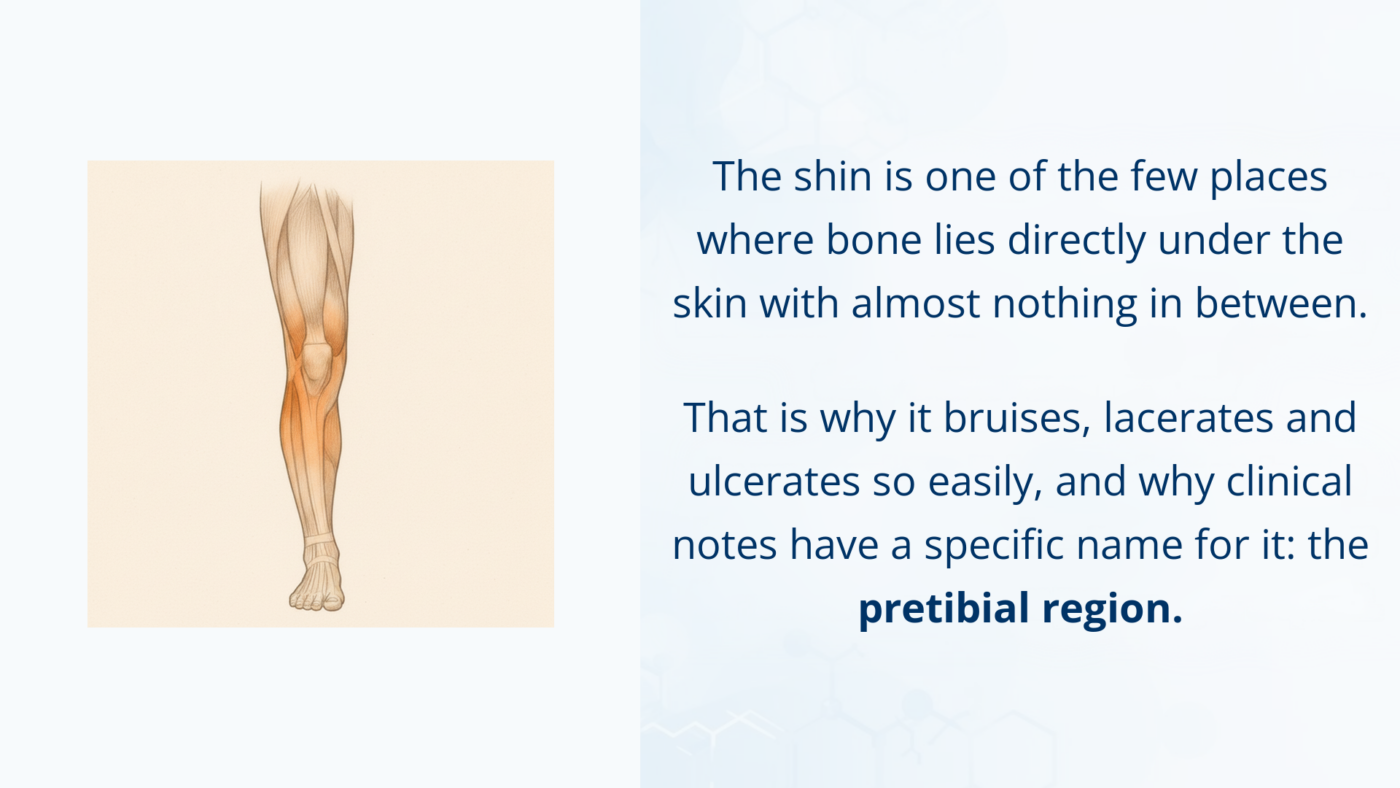
The pretibial region is the shin: the front of the lower leg, over the tibia, from below the knee to above the ankle. The sharp front edge of the tibia (the anterior border) can be felt along its whole length, covered only by skin and a thin layer of tissue.
Pre- means “in front of” and tibial refers to the tibia, the shin bone. In everyday English the same area is simply the shin; the lower leg as a whole is sometimes called the crus (adjective crural).
🔍 Clinical Usage
The pretibial region is a frequent site of injury and skin change, so it turns up in:
- wound care and emergency notes (pretibial laceration, a classic injury in older adults with thin skin)
- dermatology letters (pretibial myxedema in thyroid disease)
- examination for fluid retention (pretibial edema, tested by pressing a thumb into the shin)
- orthopedic notes (tibial shaft fracture, shin splints or medial tibial stress syndrome)
Common collocations include:
- pretibial edema / pitting edema over the shins
- pretibial laceration
- pretibial myxedema
- tenderness along the anterior border of the tibia
Here’s a natural clinical example:
“Bilateral pitting pretibial edema to the mid-shin; no calf tenderness.”
→ Meaning: Pressing the front of both lower legs leaves a dent, with the swelling reaching halfway up the shin, and the calves are not tender.
Try OET Practice Questions for Free
Exam-style questions with every answer explained.
Listening · Reading · Writing · Speaking — No sign-up needed
🗣 Pronunciation
pree-TIB-ee-ul — the stress is on the second syllable.
💡 OET Tip
Shin is acceptable in a letter and is what patients say. Pretibial is the form you will see as an adjective: pretibial edema, pretibial laceration. If you write “shin swelling”, the reader understands you; if you write “pretibial edema”, the reader also knows you examined for pitting.
🔗 Related Words
Browse every term in our Medical English Body Parts A–Z guide.
For the clinical words you will meet in the OET, with what to say to patients, see our OET Vocabulary guide.