

OET Medical Vocabulary, Word of the Day
Popliteal Fossa (Back of the Knee) – Meaning and Usage in Medical English

Nov
👁 What Does “Popliteal Fossa” Mean?
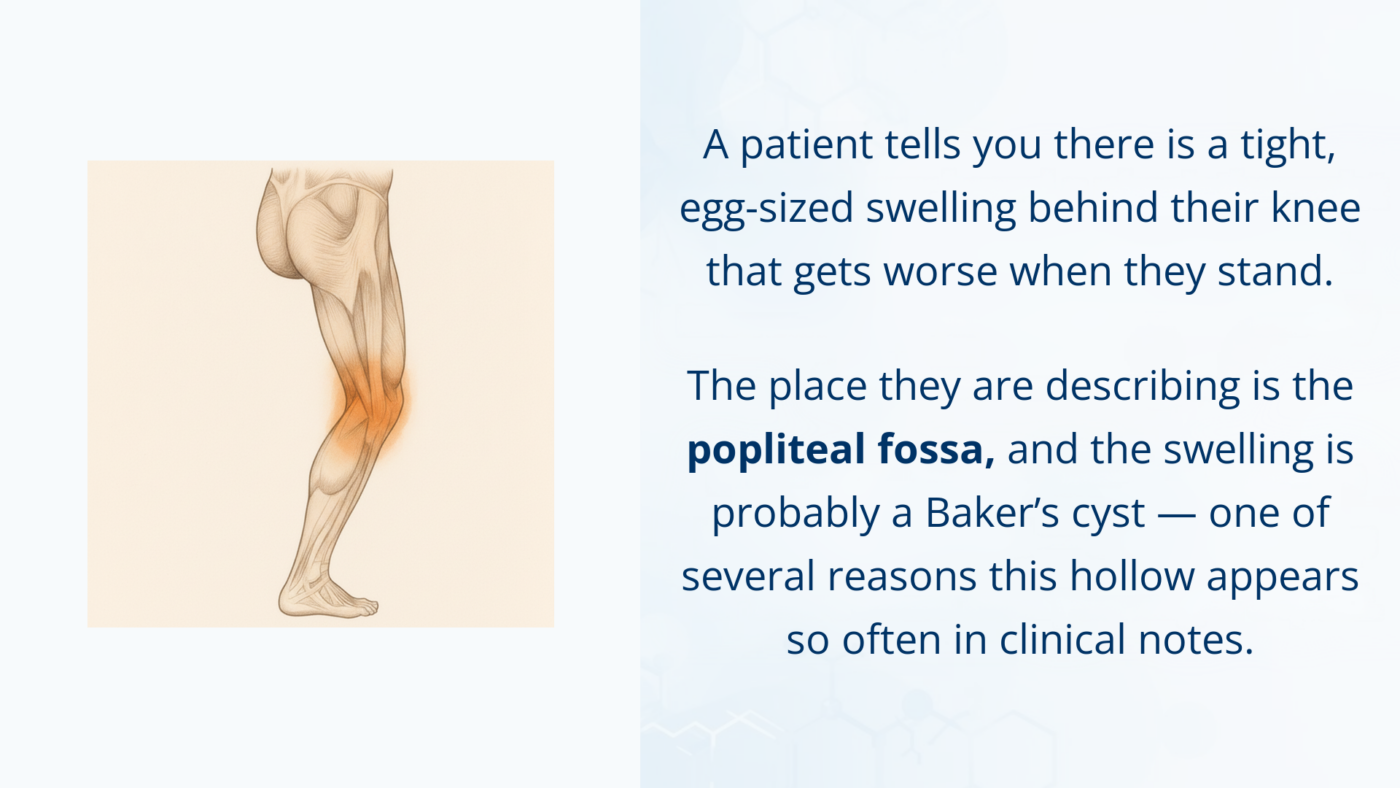
The popliteal fossa is the diamond-shaped hollow at the back of the knee. It is bordered by the hamstring tendons above and the two heads of the gastrocnemius (calf) muscle below, and it is easiest to see when the knee is slightly bent.
The popliteal artery, vein and tibial nerve pass through it, which is why the popliteal pulse is felt here. The word comes from Latin poples, “ham” or “back of the knee”. Fossa means “ditch” or “hollow”.
🔍 Clinical Usage
The popliteal fossa appears in:
- vascular examination (popliteal pulse, popliteal aneurysm)
- rheumatology and orthopedic notes (Baker’s cyst, also called popliteal cyst)
- deep vein thrombosis assessments (popliteal vein)
- anesthetic records (popliteal nerve block)
Common collocations include:
- swelling in the popliteal fossa
- popliteal pulse present / absent
- popliteal cyst
- tenderness in the popliteal fossa
Here’s a natural clinical example:
“Tense, non-tender swelling in the left popliteal fossa, consistent with a Baker’s cyst; popliteal pulse palpable.”
→ Meaning: There is a firm, painless lump at the back of the left knee that looks like a fluid-filled cyst, and the pulse behind the knee can be felt.
Try OET Practice Questions for Free
Exam-style questions with every answer explained.
Listening · Reading · Writing · Speaking — No sign-up needed
🗣 Pronunciation
pop-LIT-ee-ul FOSS-uh — the stress is on the second syllable of popliteal. You will also hear pop-li-TEE-ul; both are accepted.
💡 OET Tip
Patients say “behind my knee” or “the back of my knee”. Use their words in the role-play, and use popliteal fossa in the referral letter, especially when you are describing a lump or a pulse, because the reader needs to know exactly where you examined.