

OET Medical Vocabulary, Word of the Day
Canthus (Corner of the Eye) – Meaning and Usage in Medical English

Nov
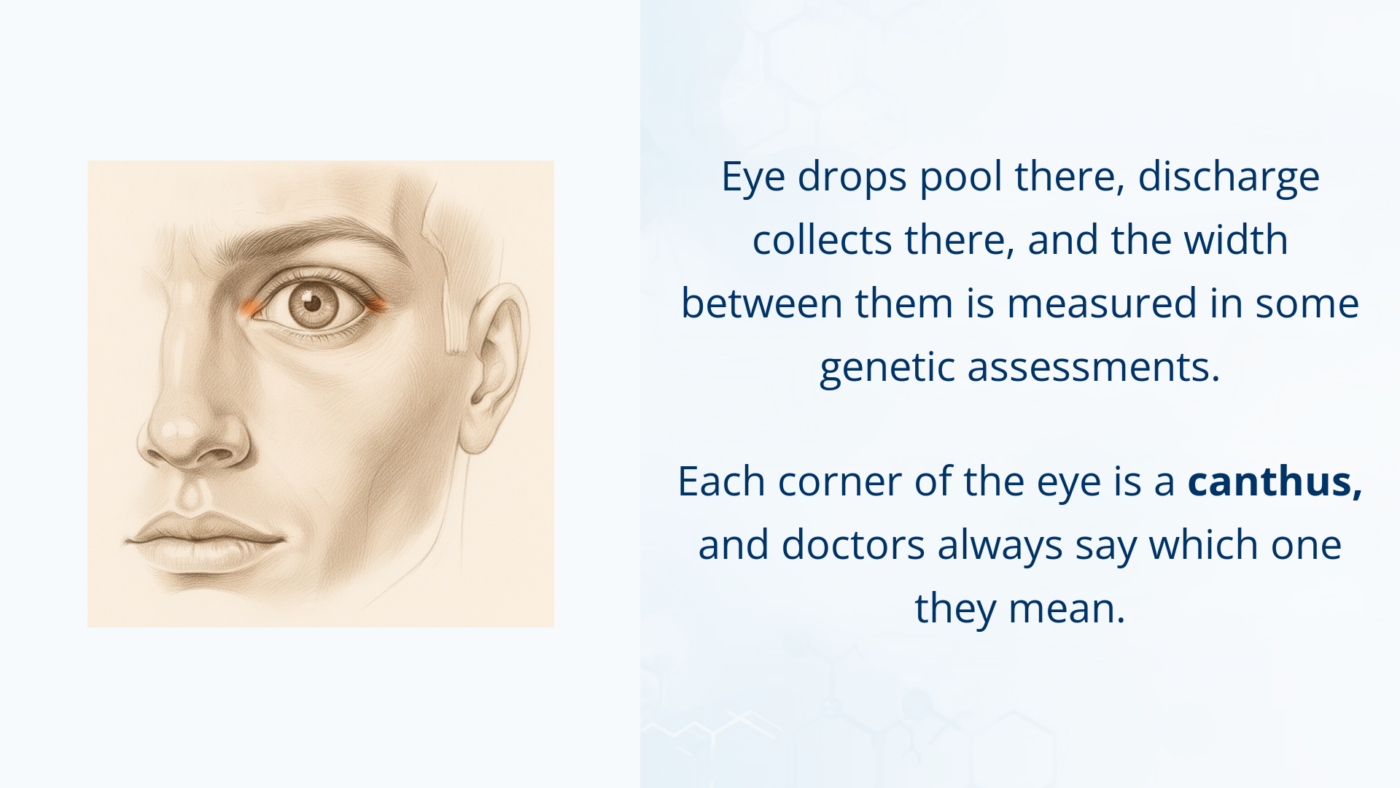
👁 What Does “Canthus” Mean?
A canthus is the corner of the eye, where the upper and lower eyelids meet. Each eye has two: the medial canthus (inner corner, near the nose) and the lateral canthus (outer corner).
The word comes from Greek kanthos, “corner of the eye”. The plural is canthi, and the adjective is canthal, as in intercanthal distance.
🔍 Clinical Usage
The canthi appear in ophthalmology, emergency, pediatrics and nursing notes:
- discharge at the medial canthus — common in conjunctivitis and blocked tear ducts
- punctal occlusion — pressing on the inner corner after eye drops so less medicine drains into the nose
- lateral canthotomy — an emergency cut at the outer corner to relieve pressure behind the eye
- canthal laceration — injury near the corner, which may damage the tear drainage system
- telecanthus — increased distance between the inner corners, noted in some syndromes
Common collocations include:
- medial / lateral canthus
- crusting at the inner canthus
- intercanthal distance
- swelling over the medial canthal area
Here’s a natural clinical example:
“Mucopurulent discharge at the right medial canthus; conjunctiva injected.”
→ Meaning: There is thick yellow-white discharge at the inner corner of the right eye, and the white of the eye looks red.
Try OET Practice Questions for Free
Exam-style questions with every answer explained.
Listening · Reading · Writing · Speaking — No sign-up needed
🗣 Pronunciation
KAN-thus — the stress is on the first syllable. Canthi is KAN-thy.
💡 OET Tip
With patients, say the inner corner or the outer corner of your eye. In writing, always add medial or lateral, because “canthus” alone is ambiguous. Don’t confuse the canthus (corner) with the cornea (the clear front of the eye).