

OET Medical Vocabulary, Word of the Day
Greater Trochanter (Bony Point of the Hip) – Meaning and Usage in Medical English

Nov
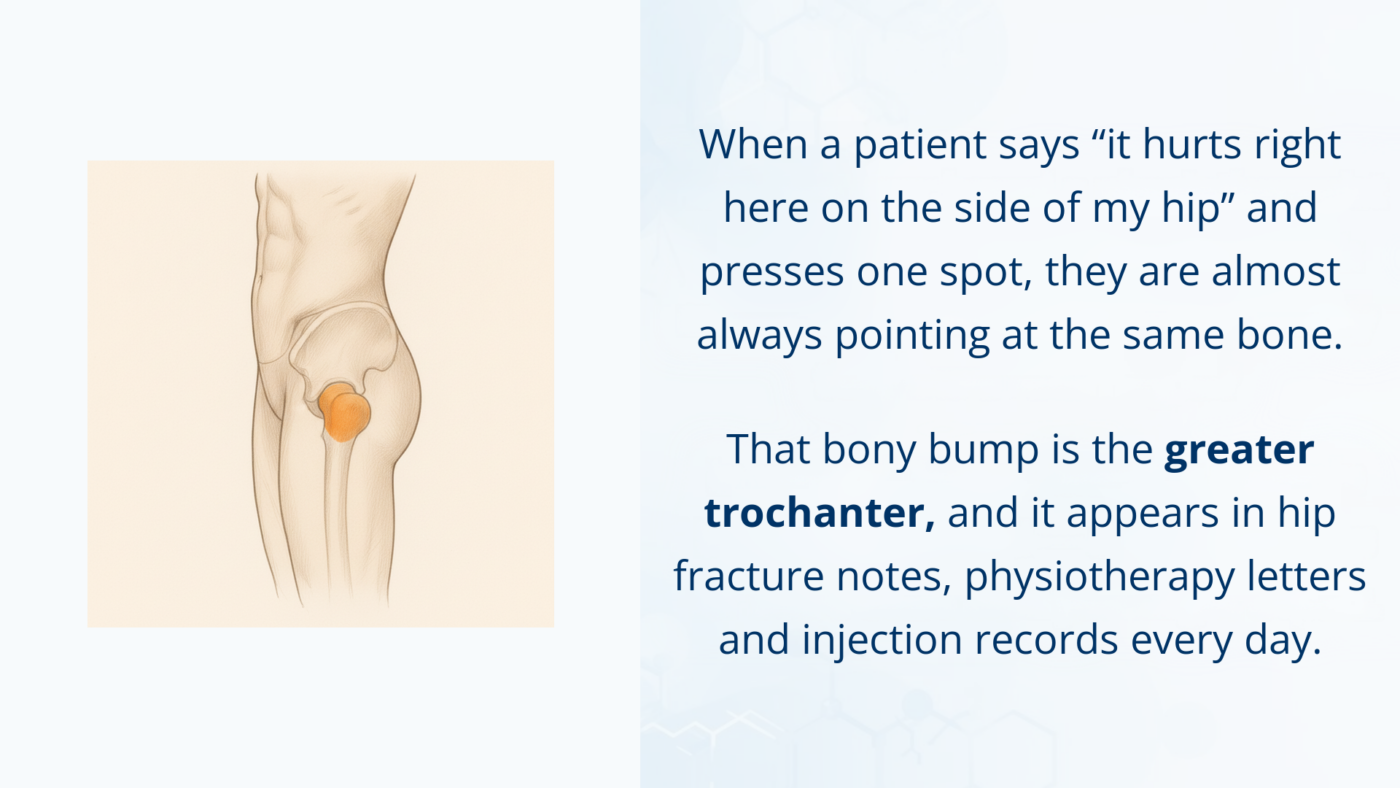
👁 What Does “Greater Trochanter” Mean?
The greater trochanter is the large bony prominence at the top of the femur, on the outer side of the hip. It is the widest point of the hips and the part you can feel when you press the side of your hip while standing.
The word trochanter comes from Greek trokhantēr, from trekhein, “to run”, because the hip muscles that attach here are the ones used in running. There is also a lesser trochanter, a smaller bump on the inner side of the femur that cannot be felt through the skin.
🔍 Clinical Usage
The greater trochanter is one of the most-used landmarks of the lower limb. You will meet it in:
- hip fracture descriptions (intertrochanteric, subtrochanteric)
- physiotherapy and rheumatology notes on lateral hip pain
- steroid injection records
- pressure injury charts for patients lying on their side
Two conditions are especially common:
- trochanteric bursitis, now usually called greater trochanteric pain syndrome — pain over the outer hip, worse when lying on that side
- intertrochanteric fracture — a hip fracture through the bone between the greater and lesser trochanters, typical after a fall in older adults
Common collocations include:
- tenderness over the greater trochanter
- greater trochanteric pain syndrome
- intertrochanteric fracture
- pressure area over the greater trochanter
Here’s a natural clinical example:
“Point tenderness over the right greater trochanter; pain reproduced on lying on the right side.”
→ Meaning: Pressing the bony point on the outer right hip is painful, and lying on that side brings on the same pain.
Try OET Practice Questions for Free
Exam-style questions with every answer explained.
Listening · Reading · Writing · Speaking — No sign-up needed
🗣 Pronunciation
GRAY-ter troh-KAN-ter — the stress in trochanter is on the second syllable.
💡 OET Tip
Patients say “my hip” for everything from the groin to the buttock. If they point to the outer side, write “lateral hip pain over the greater trochanter”, not just “hip pain”. The precise landmark tells the reader which diagnoses to think about.