

OET Medical Vocabulary, Word of the Day
Palpebra (Eyelid) – Meaning and Usage in Medical English

Nov
👁 What Does “Palpebra” Mean?
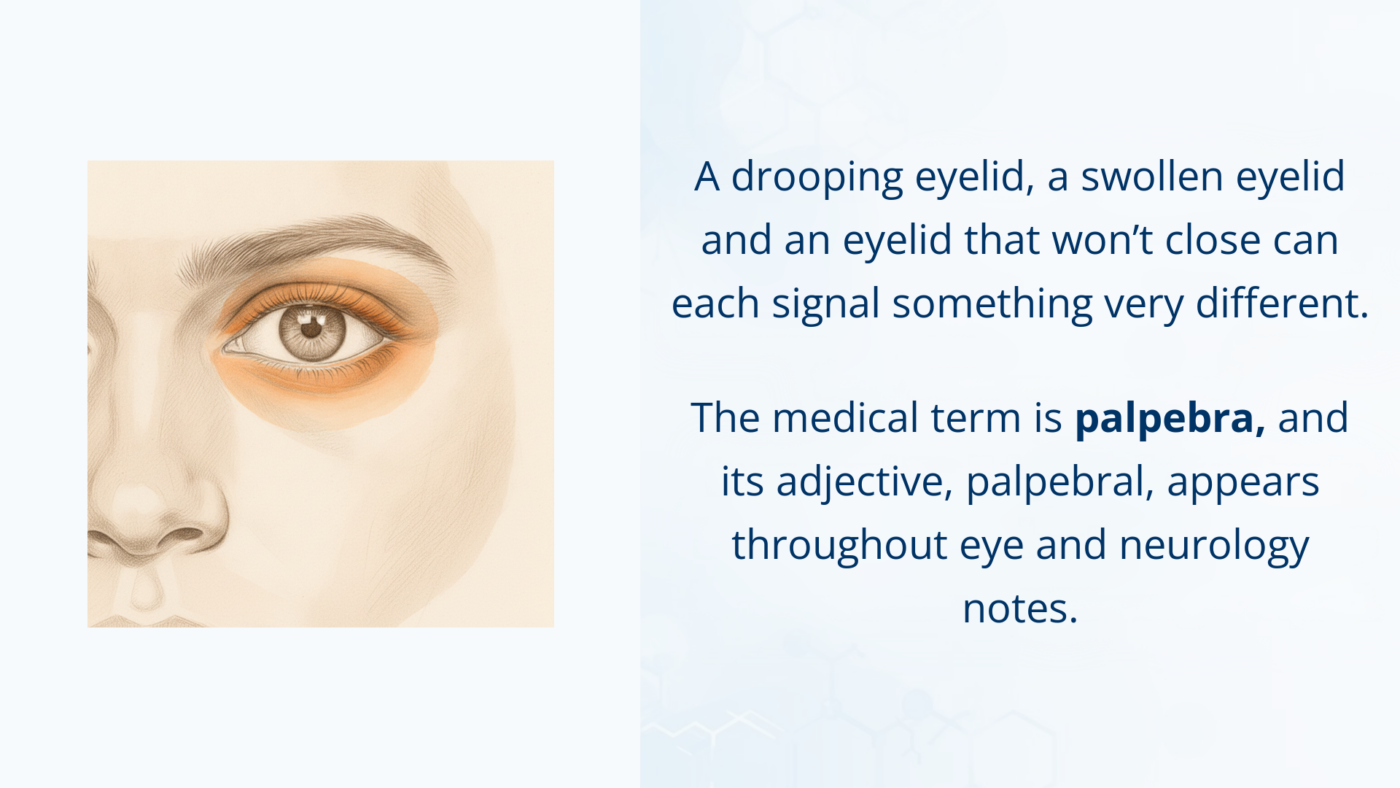
The palpebra is the eyelid: each of the two movable folds of skin and muscle that cover and protect the front of the eye. Each eye has an upper and a lower eyelid, which meet at the corners of the eye.
The word is Latin for “eyelid”. The plural is palpebrae, and the adjective is palpebral, as in palpebral fissure, the opening between the lids.
🔍 Clinical Usage
The eyelids appear in ophthalmology, neurology, emergency and dermatology notes:
- ptosis — drooping of the upper eyelid
- blepharitis — inflammation of the eyelid margins
- stye (hordeolum) — a painful infected lump on the eyelid
- periorbital / eyelid edema — swelling around the eyes, for example in allergy or kidney disease
- incomplete eyelid closure — seen in facial nerve palsy and a risk to the cornea
Common collocations include:
- upper / lower eyelid
- eyelid swelling
- palpebral fissure
- eyelid laceration
Here’s a natural clinical example:
“Left-sided ptosis with a constricted left pupil.”
→ Meaning: The left upper eyelid is drooping and the left pupil is smaller than normal.
Try OET Practice Questions for Free
Exam-style questions with every answer explained.
Listening · Reading · Writing · Speaking — No sign-up needed
🗣 Pronunciation
PAL-puh-bruh — the stress is on the first syllable. Palpebrae is PAL-puh-bree.
💡 OET Tip
In speaking, always say eyelid. In writing, eyelid is also standard; palpebral is used mainly in fixed terms. Many eyelid words start with blephar- (from Greek), such as blepharitis and blepharoplasty, so learn both roots.