

OET Vocabulary, Word of the Day
Antebrachium (Forearm) – Meaning and Usage in Medical English

Oct
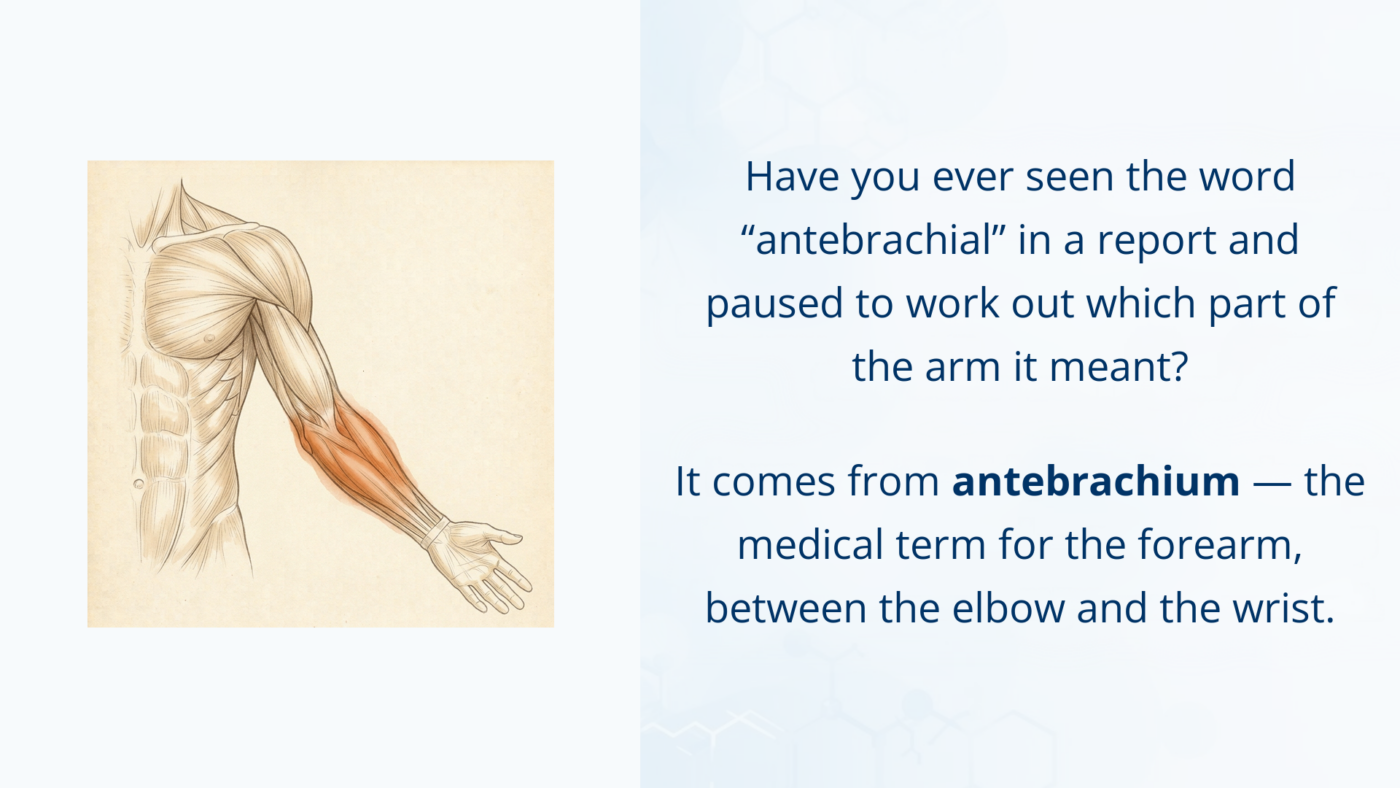
The antebrachium is the medical term for the forearm: the part of the arm between the elbow and the wrist, containing the radius and ulna.
👁 What Does “Antebrachium” Mean?
The antebrachium is the forearm — the part of the upper limb between the elbow and the wrist. It contains two bones: the radius (on the thumb side) and the ulna (on the little-finger side).
The word comes from Latin: ante (“in front of” or “before”) and brachium (“arm”). In anatomy, the brachium is the upper arm, so the antebrachium is the segment that comes after it. The adjective is antebrachial.
🔍 Clinical Usage
In everyday clinical notes, most clinicians simply write “forearm”. You are more likely to meet antebrachium and antebrachial in:
- anatomy textbooks and lecture notes
- nerve names, such as the lateral antebrachial cutaneous nerve
- neurology and nerve conduction reports
- veterinary medicine, where the term is used routinely
Common collocations include:
- antebrachial region
- antebrachial fascia
- medial / lateral antebrachial cutaneous nerve
Here’s a natural clinical example:
“Paresthesia along the lateral forearm, suggestive of lateral antebrachial cutaneous nerve irritation following venipuncture.”
→ Meaning: The patient has tingling on the outer side of the forearm, probably because a small skin nerve was irritated during a blood test.
Try OET Practice Questions for Free
Exam-style questions with every answer explained.
Listening · Reading · Writing · Speaking — No sign-up needed
🗣 Pronunciation
an-tee-BRAY-kee-um — and the adjective antebrachial is an-tee-BRAY-kee-ul.
💡 OET Tip
You don’t need to use antebrachium in OET Writing — forearm is clear and professional. But recognizing the root brachi- will help you understand unfamiliar terms in the Reading sub-test.
🔗 Related Words
Browse every term in our Medical English Body Parts A–Z guide.