

OET Vocabulary, Word of the Day
Antecubital Fossa (Inner Elbow) – Meaning and Usage in Medical English

Oct
The antecubital fossa is the medical term for the inner elbow: the triangular hollow on the front of the elbow where blood is usually drawn.
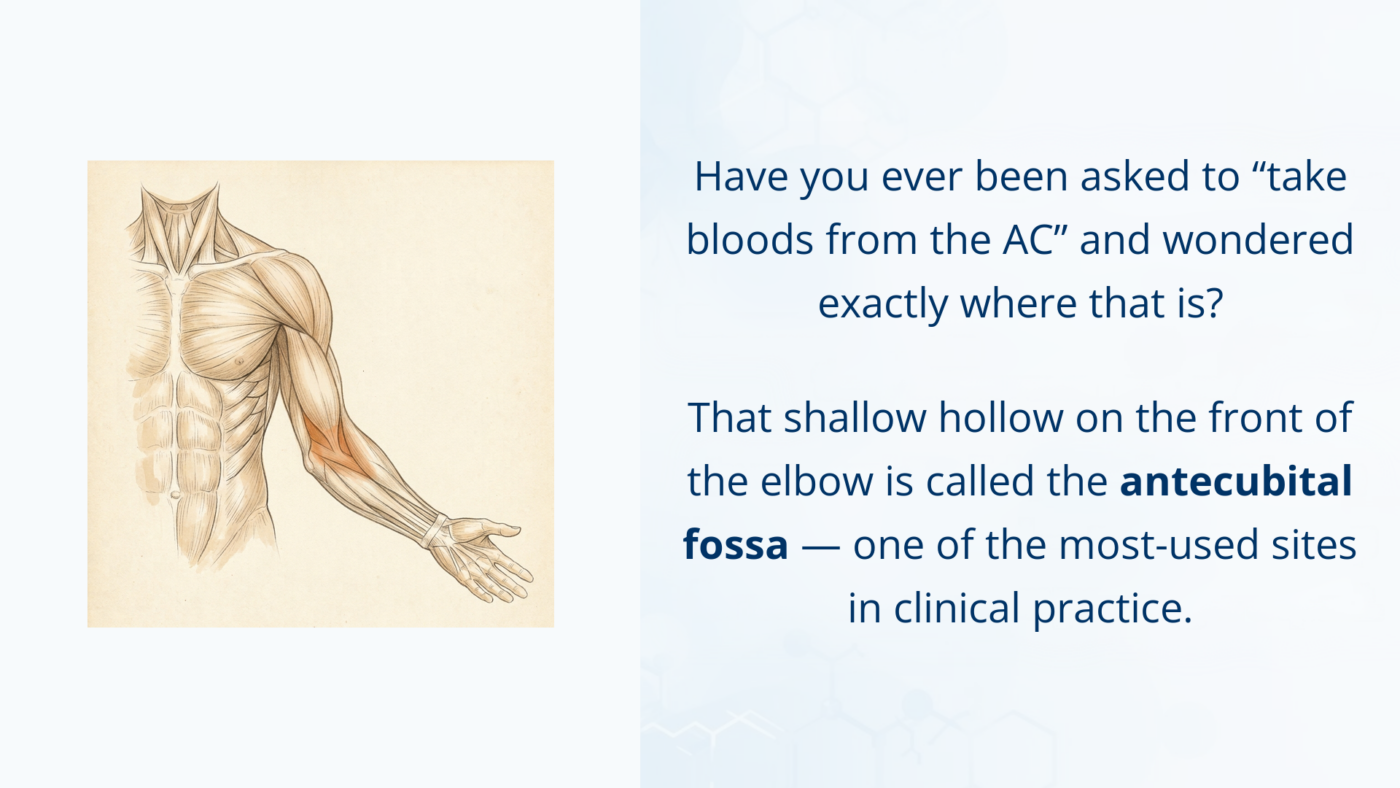
👁 What Does “Antecubital Fossa” Mean?
The antecubital fossa is the shallow, triangular hollow on the front of the elbow — the area you see when you bend your arm and look at the inside of the joint.
The term comes from Latin: ante (“in front of”), cubitus (“elbow”), and fossa (“ditch” or “trench”). The plural is antecubital fossae. You will also see the shorter form cubital fossa, and the abbreviations AC or ACF in clinical notes.
Just under the skin here runs the median cubital vein, which is why this is the most common site for taking blood.
🔍 Clinical Usage
The antecubital fossa appears constantly in nursing and medical documentation, especially in:
- venipuncture (blood sampling)
- IV cannulation
- blood pressure measurement (the stethoscope is placed over the brachial artery here)
- dermatology notes, as eczema often affects the skin creases of the elbows
Common collocations include:
- right / left antecubital fossa
- cannula in the antecubital fossa
- bruising at the antecubital fossa
- flexural eczema of the antecubital fossae
Here’s a natural clinical example:
“A 20-gauge cannula was inserted into the left antecubital fossa.”
→ Meaning: A small IV tube was placed in a vein on the inside of the left elbow.
Try OET Practice Questions for Free
Exam-style questions with every answer explained.
Listening · Reading · Writing · Speaking — No sign-up needed
🗣 Pronunciation
an-tee-KYOO-bi-tul FOS-uh — the stress falls on KYOO and FOS. The plural fossae is pronounced FOS-ee.
💡 OET Tip
Patients rarely know this term. In the Speaking test, say “the inside of your elbow”. In a referral letter to a doctor or nurse, antecubital fossa is the precise, professional choice.
🔗 Related Words
Browse every term in our Medical English Body Parts A–Z guide.