

OET Medical Vocabulary, Word of the Day
Sclera (White of the Eye) – Meaning and Usage in Medical English
Nov
👁 What Does “Sclera” Mean?
The sclera is the white of the eye: the tough, opaque outer layer that covers most of the eyeball. At the front it is covered by a thin clear membrane, the conjunctiva, and it joins the transparent cornea at the edge of the iris.
The word comes from Greek sklēros, “hard”, reflecting its protective role. The plural is sclerae, and the adjective is scleral.
🔍 Clinical Usage
The sclera appears in general medicine, gastroenterology, ophthalmology and pediatrics notes:
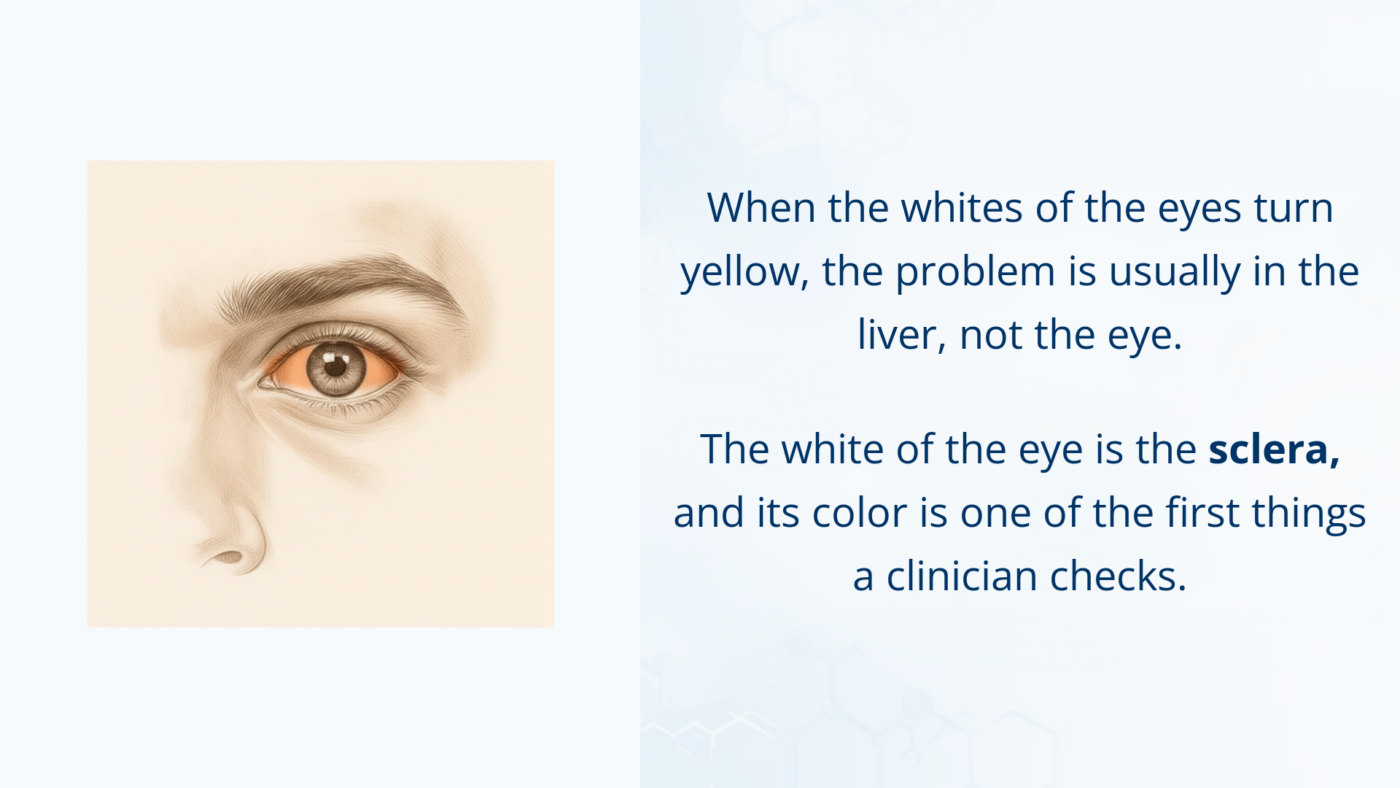
- scleral icterus — yellow sclerae, an early sign of jaundice
- scleritis — painful inflammation of the sclera, sometimes linked to autoimmune disease
- subconjunctival hemorrhage — a bright red patch over the white of the eye, usually harmless
- blue sclerae — a feature of some connective tissue disorders
- scleral injury — penetrating trauma to the eyeball
Common collocations include:
- icteric / anicteric sclerae
- scleral injection (redness)
- yellowing of the sclerae
- scleral lens
Here’s a natural clinical example:
“Sclerae icteric; abdomen soft, mild right upper quadrant tenderness.”
→ Meaning: The whites of the eyes are yellow, and the upper right part of the abdomen is slightly tender.
Try OET Practice Questions for Free
Exam-style questions with every answer explained.
Listening · Reading · Writing · Speaking — No sign-up needed
🗣 Pronunciation
SKLEER-uh — the stress is on the first syllable. Sclerae is SKLEER-ee.
💡 OET Tip
With patients, say the whites of your eyes. In writing, sclera is standard, and “anicteric” means no yellowing. Don’t confuse sclera with sclerosis (hardening of tissue) or with the cornea, the clear window in front of the iris.
🔗 Related Words
Browse every term in our Medical English Body Parts A–Z guide.
For the clinical words you will meet in the OET, with what to say to patients, see our OET Vocabulary guide.