

OET Medical Vocabulary, Word of the Day
Uvula (Hanging Tissue at the Back of the Throat) – Meaning and Usage in Medical English
Nov
👁 What Does “Uvula” Mean?
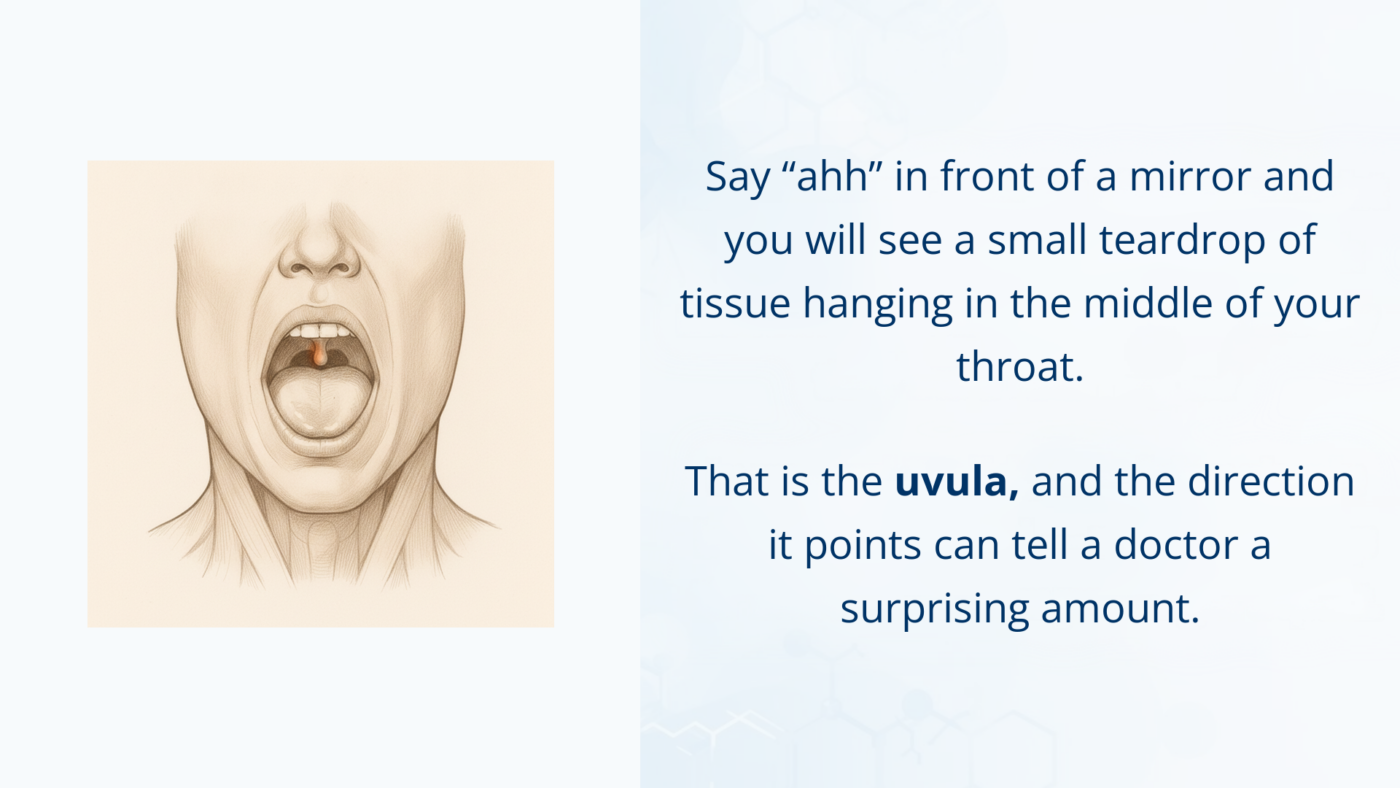
The uvula is the small fleshy projection that hangs down from the back of the soft palate, in the middle of the throat. It is made of muscle and connective tissue and moves with the soft palate during swallowing and speech.
The word is Latin for “little grape”, from uva. The plural is uvulae, and the adjective is uvular.
🔍 Clinical Usage
The uvula is noted in ENT, emergency and neurology examinations:
- uvular deviation — the uvula is pushed to one side, a classic sign of a peritonsillar abscess (quinsy)
- uvula deviates on saying “ahh” — used to test the vagus nerve
- uvulitis — swelling and redness of the uvula
- bifid uvula — a uvula split into two, sometimes linked with a hidden cleft palate
- uvulopalatopharyngoplasty (UPPP) — surgery for snoring or obstructive sleep apnea
Common collocations include:
- uvula central / midline
- uvular deviation to the left / right
- swollen uvula
- elongated uvula
Here’s a natural clinical example:
“Right peritonsillar swelling with uvula deviated to the left; trismus present.”
→ Meaning: There is a swelling beside the right tonsil that is pushing the uvula to the left, and the patient cannot open the mouth fully.
Try OET Practice Questions for Free
Exam-style questions with every answer explained.
Listening · Reading · Writing · Speaking — No sign-up needed
🗣 Pronunciation
YOO-vyuh-luh — the stress is on the first syllable.
💡 OET Tip
Most patients do not know the word, so describe it: “the little thing that hangs at the back of your throat.” In writing, uvula is standard, and central or deviated is the key detail. Don’t confuse the uvula (hanging from the soft palate) with the epiglottis (the flap lower down that covers the airway during swallowing).
🔗 Related Words
Browse every term in our Medical English Body Parts A–Z guide.
For the clinical words you will meet in the OET, with what to say to patients, see our OET Vocabulary guide.