

OET Vocabulary, Word of the Day
Dorsum of the Hand (Back of the Hand) – Meaning and Usage in Medical English

Oct
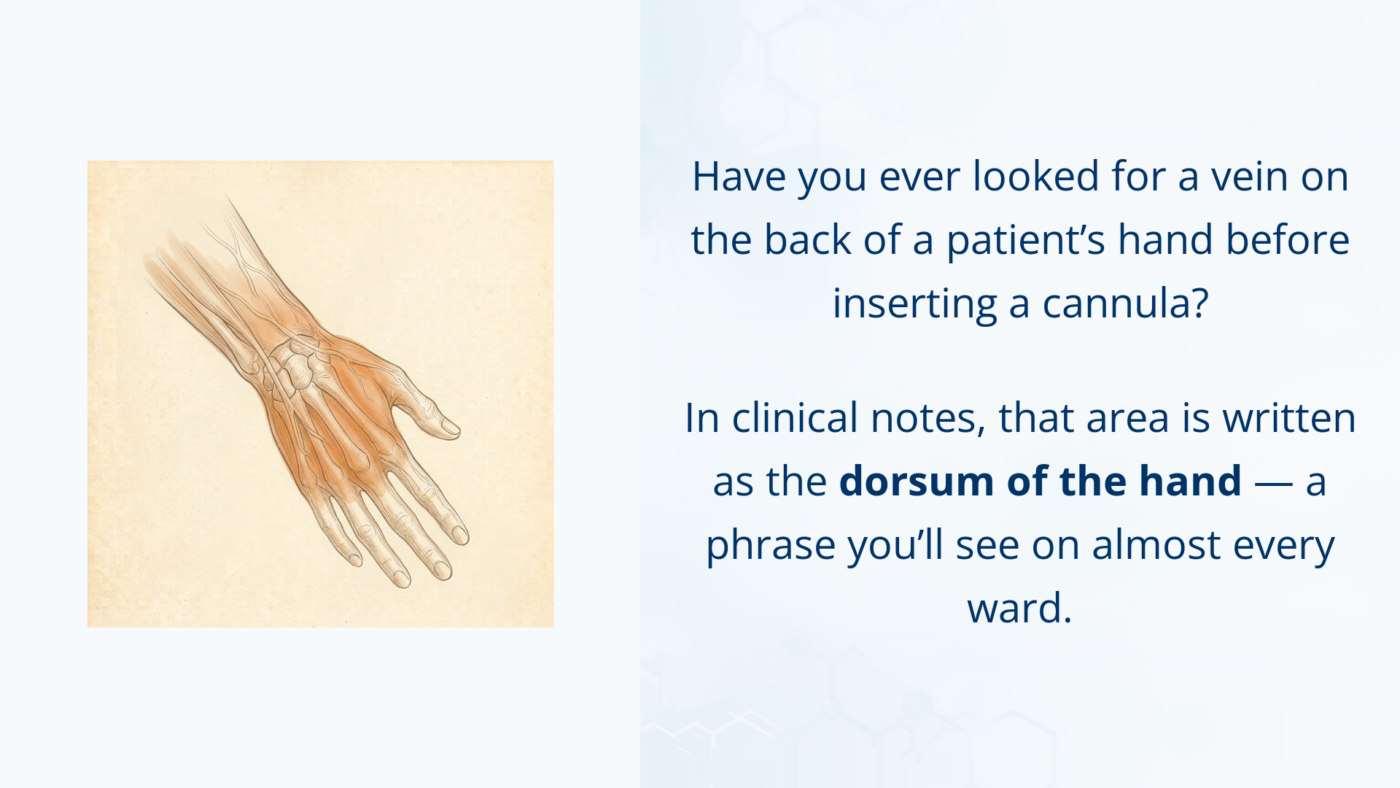
The dorsum of the hand is the medical term for the back of the hand: the surface opposite the palm, from the wrist to the knuckles.
👁 What Does “Dorsum of the Hand” Mean?
The dorsum of the hand is the back of the hand — the surface opposite the palm, from the wrist to the knuckles.
Dorsum is the Latin word for “back”. It is used for the back or upper surface of several body parts — for example, the dorsum of the nose and the dorsum of the foot. The adjective is dorsal, and the opposite surface of the hand is described as palmar or volar.
🔍 Clinical Usage
The dorsum of the hand appears frequently in:
- IV cannulation records, as the dorsal hand veins are a common cannula site
- nursing assessments of cannula sites
- wound and burn documentation
- rheumatology and dermatology notes
Common collocations include:
- dorsum of the left / right hand
- cannula in the dorsum of the hand
- swelling over the dorsum of the hand
- dorsal hand veins
Here’s a natural clinical example:
“22G cannula sited in the dorsum of the right hand; site clean, no signs of phlebitis.”
→ Meaning: A small IV tube was placed in a vein on the back of the right hand, and the area looks healthy with no inflammation.
Try OET Practice Questions for Free
Exam-style questions with every answer explained.
Listening · Reading · Writing · Speaking — No sign-up needed
🗣 Pronunciation
DOR-sum of the hand — the adjective dorsal is DOR-sul.
💡 OET Tip
In the Speaking test, “the back of your hand” is all a patient needs to hear. In written handovers and referral letters, dorsum of the hand is the precise term to document where a cannula, wound or swelling is located.
🔗 Related Words
Browse every term in our Medical English Body Parts A–Z guide.