

OET Medical Vocabulary, Word of the Day
Zygoma (Cheekbone) – Meaning and Usage in Medical English
Nov
👁 What Does “Zygoma” Mean?
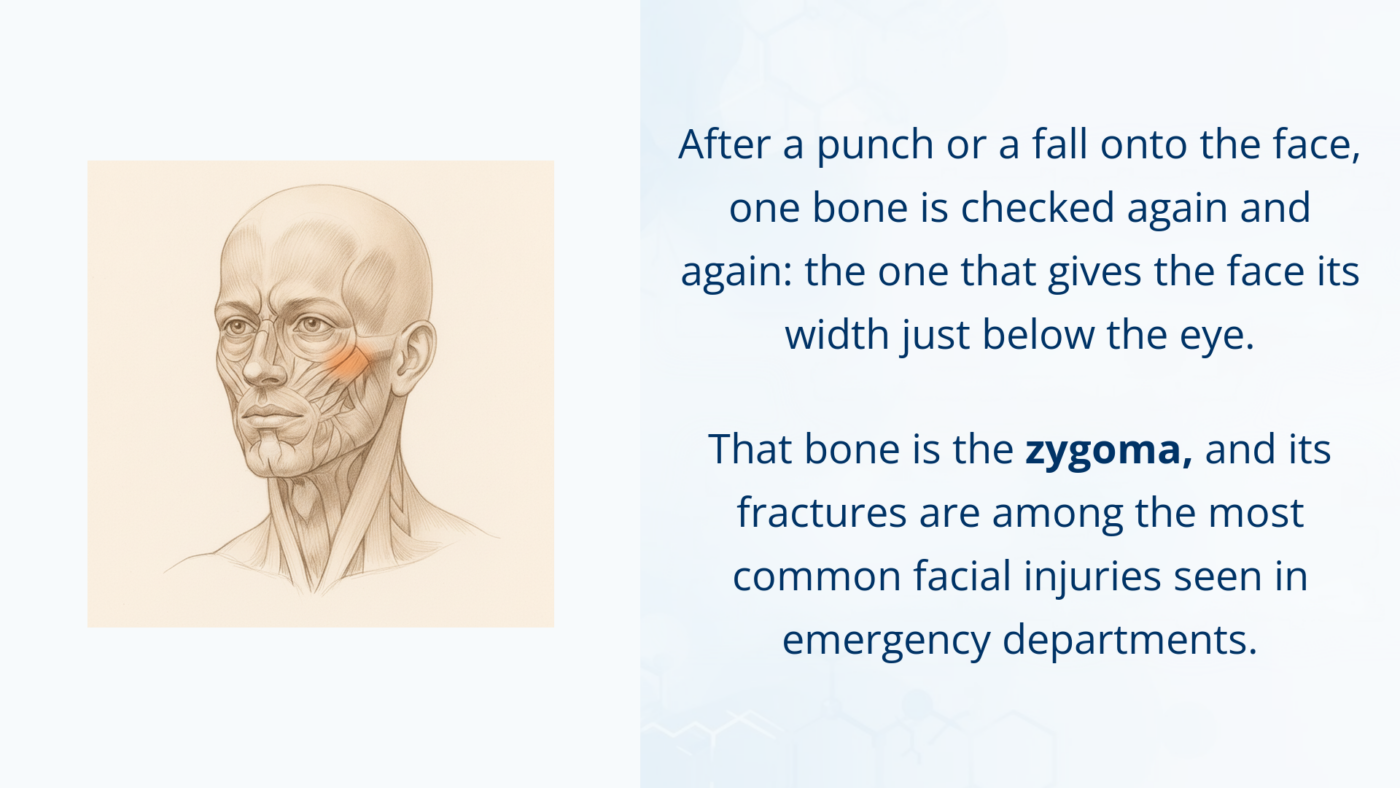
The zygoma is the cheekbone: the bone that forms the prominence of the upper cheek and part of the outer wall and floor of the eye socket. It is also called the zygomatic bone or malar bone.
The word comes from Greek zygon, “yoke”, because the bone and its arch join the face to the side of the skull. The plural is zygomata, and the adjective is zygomatic, as in zygomatic arch.
🔍 Clinical Usage
The zygoma appears in emergency, maxillofacial and radiology notes:
- zygomatic fracture — a break of the cheekbone, often from assault or a fall
- zygomaticomaxillary complex (ZMC) fracture — a fracture involving the cheekbone and its joins with nearby bones
- zygomatic arch fracture — a break of the thin bony bar at the side of the face
- flattening of the cheek — a visible sign of a depressed fracture
- altered sensation over the cheek — numbness from nerve involvement below the eye
Common collocations include:
- zygomatic arch
- depressed zygomatic fracture
- tenderness over the left zygoma
- malar flattening
Here’s a natural clinical example:
“Tenderness and flattening over the right zygoma; numbness of the right cheek and upper lip.”
→ Meaning: The right cheekbone is painful and looks pushed in, and the skin of the right cheek and upper lip has lost feeling.
Try OET Practice Questions for Free
Exam-style questions with every answer explained.
Listening · Reading · Writing · Speaking — No sign-up needed
🗣 Pronunciation
zy-GOH-muh — the stress is on the second syllable. Zygomatic is zy-goh-MAT-ik.
💡 OET Tip
With patients, say cheekbone. In writing, use zygoma or zygomatic bone. Don’t confuse the zygoma (the cheekbone) with the maxilla (the upper jaw); a fracture can involve both, but they are separate bones.
🔗 Related Words
Browse every term in our Medical English Body Parts A–Z guide.
For the clinical words you will meet in the OET, with what to say to patients, see our OET Vocabulary guide.