

OET Medical Vocabulary, Word of the Day
Auricle (Outer Ear) – Meaning and Usage in Medical English

Nov
👁 What Does “Auricle” Mean?
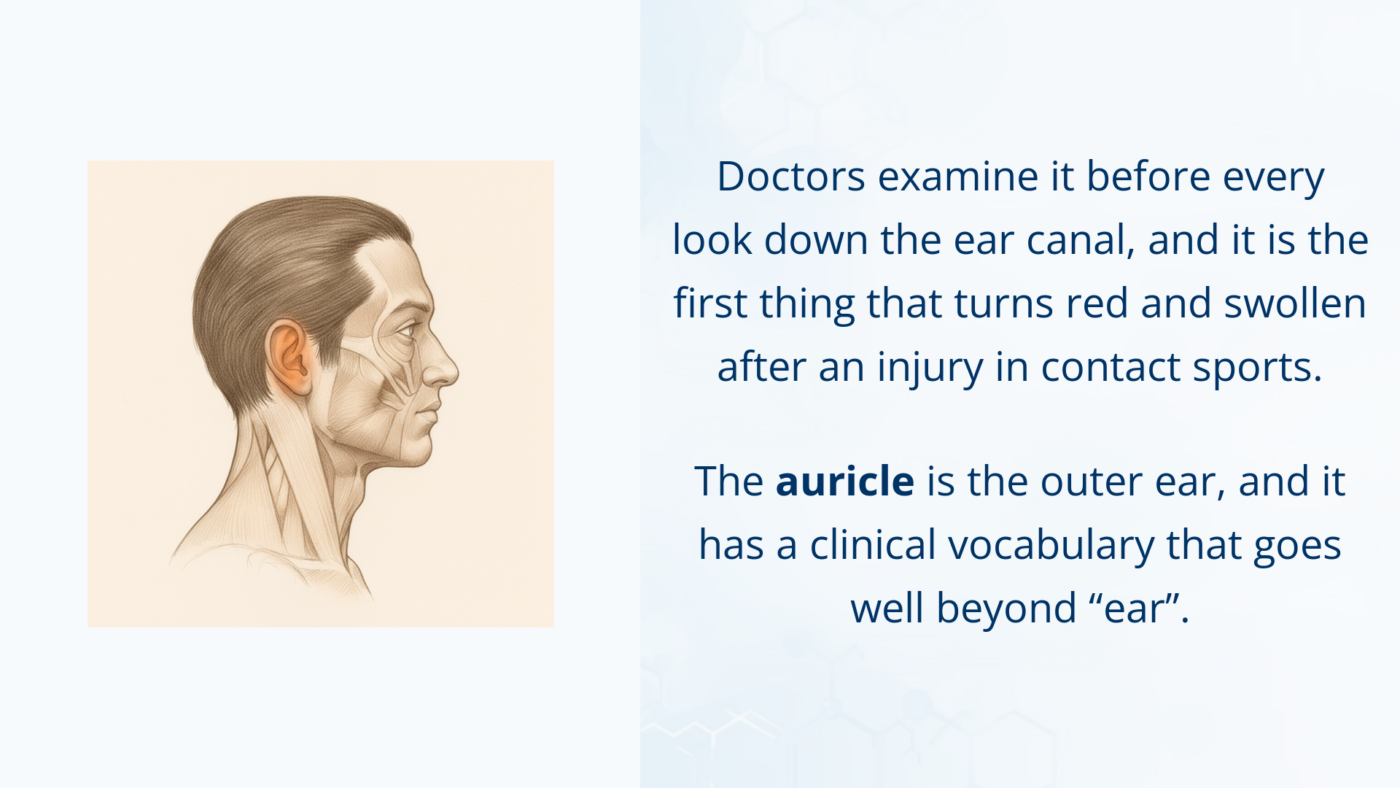
The auricle is the outer ear: the visible, shell-shaped part of the ear on the side of the head. It is made of skin over flexible cartilage, except for the soft lobe, and it guides sound into the ear canal. It is also called the pinna.
Auricle comes from Latin auricula, “little ear”. The adjective is auricular, as in auricular hematoma and preauricular lymph nodes. Be careful: auricle is also an old name for part of a heart chamber.
🔍 Clinical Usage
The auricle appears in ENT, emergency, dermatology and pediatric notes:
- auricular hematoma — blood collecting under the skin after a blow, which can lead to “cauliflower ear” if not drained
- perichondritis — infection of the tissue covering the ear cartilage
- preauricular sinus — a small pit in front of the ear, present from birth
- pinna pull — pulling the outer ear to straighten the canal before examining it
- skin cancer of the ear — common on sun-exposed rims
Common collocations include:
- auricular cartilage
- preauricular / postauricular lymph nodes
- laceration of the left auricle
- pain on moving the pinna
Here’s a natural clinical example:
“Tense, fluctuant swelling over the anterior surface of the left auricle following a rugby injury.”
→ Meaning: There is a firm swelling filled with fluid on the front of the left outer ear after a blow during rugby.
Try OET Practice Questions for Free
Exam-style questions with every answer explained.
Listening · Reading · Writing · Speaking — No sign-up needed
🗣 Pronunciation
OR-i-kul — the stress is on the first syllable. Auricular is or-RIK-yuh-ler.
💡 OET Tip
With patients, say the outside of your ear. In writing, auricle or pinna is standard. Remember that pain when the pinna is pulled suggests a problem in the outer ear canal (otitis externa), not the middle ear.
🔗 Related Words
Browse every term in our Medical English Body Parts A–Z guide.
For the clinical words you will meet in the OET, with what to say to patients, see our OET Vocabulary guide.