

OET Medical Vocabulary, Word of the Day
Occiput (Back of the Head) – Meaning and Usage in Medical English
Nov
👁 What Does “Occiput” Mean?
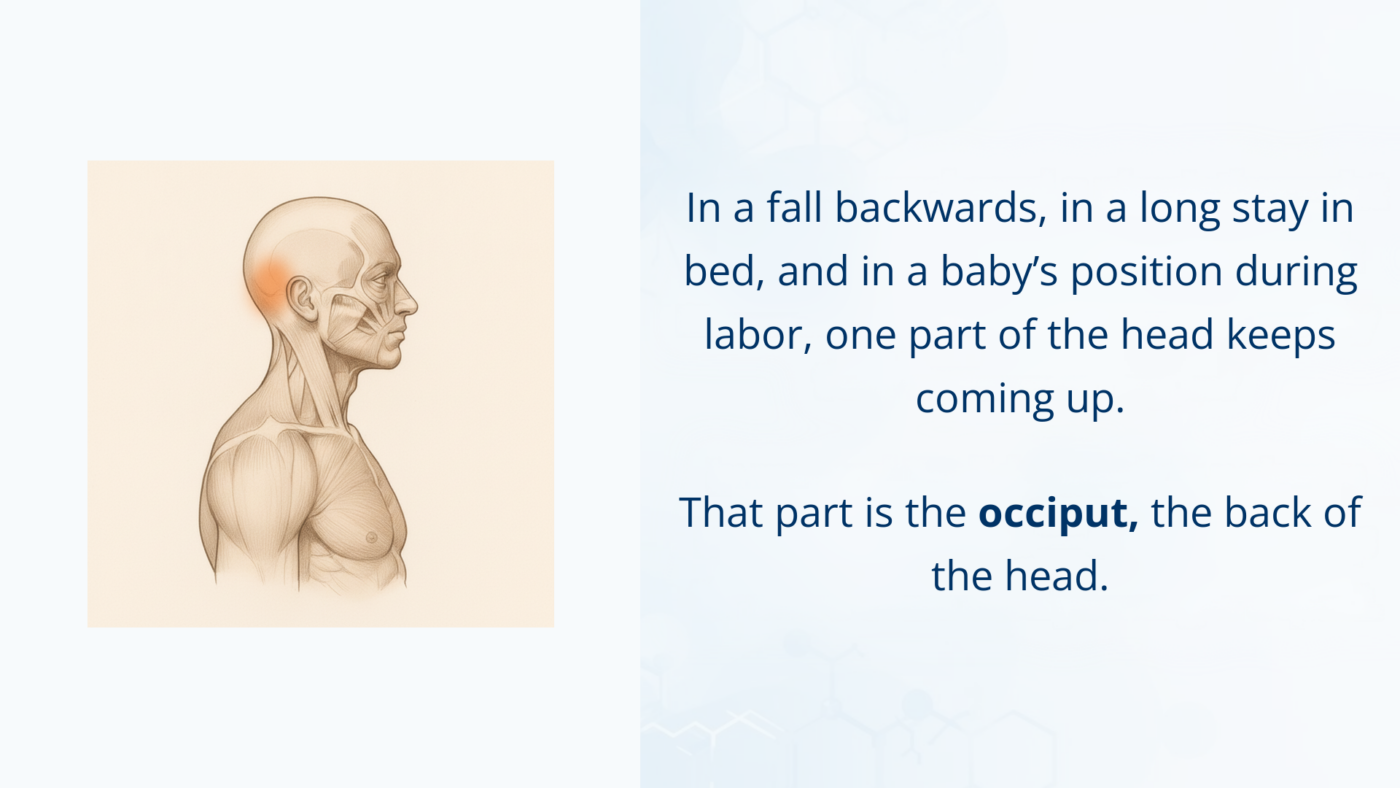
The occiput is the back of the head: the rounded lower part of the skull above the neck. It is formed by the occipital bone, which surrounds the opening where the spinal cord leaves the skull.
The word is Latin, from ob- (“against”) and caput (“head”). The adjective is occipital, as in occipital bone, occipital lobe and occipital headache.
🔍 Clinical Usage
The occiput appears in emergency, neurology, obstetrics and nursing notes:
- occipital headache — pain at the back of the head, sometimes spreading to the neck
- occipital scalp laceration or hematoma — after a fall backwards
- occiput posterior (OP) position — in labor, the back of the baby’s head faces the mother’s spine, which can slow delivery
- occipital pressure injury — a risk in bed-bound patients and infants
- occipital lobe — the brain area for vision, at the back of the head
Common collocations include:
- occipital tenderness
- boggy swelling over the occiput
- occiput anterior / occiput posterior
- occipital lymph nodes
Here’s a natural clinical example:
“Fall backwards from standing; 4 cm hematoma over the occiput, GCS 15.”
→ Meaning: The patient fell backwards and has a 4-centimeter swelling on the back of the head, but is fully alert.
Try OET Practice Questions for Free
Exam-style questions with every answer explained.
Listening · Reading · Writing · Speaking — No sign-up needed
🗣 Pronunciation
OK-sih-put — the stress is on the first syllable. Occipital is ok-SIP-ih-tul.
💡 OET Tip
With patients, say the back of your head. In writing, occiput names the location, while occipital describes structures and symptoms. Don’t confuse the occiput (back of the head) with the nape (back of the neck, below it).