

OET Medical Vocabulary, Word of the Day
Medial Malleolus (Inner Ankle Bone) – Meaning and Usage in Medical English
Nov
👁 What Does “Medial Malleolus” Mean?
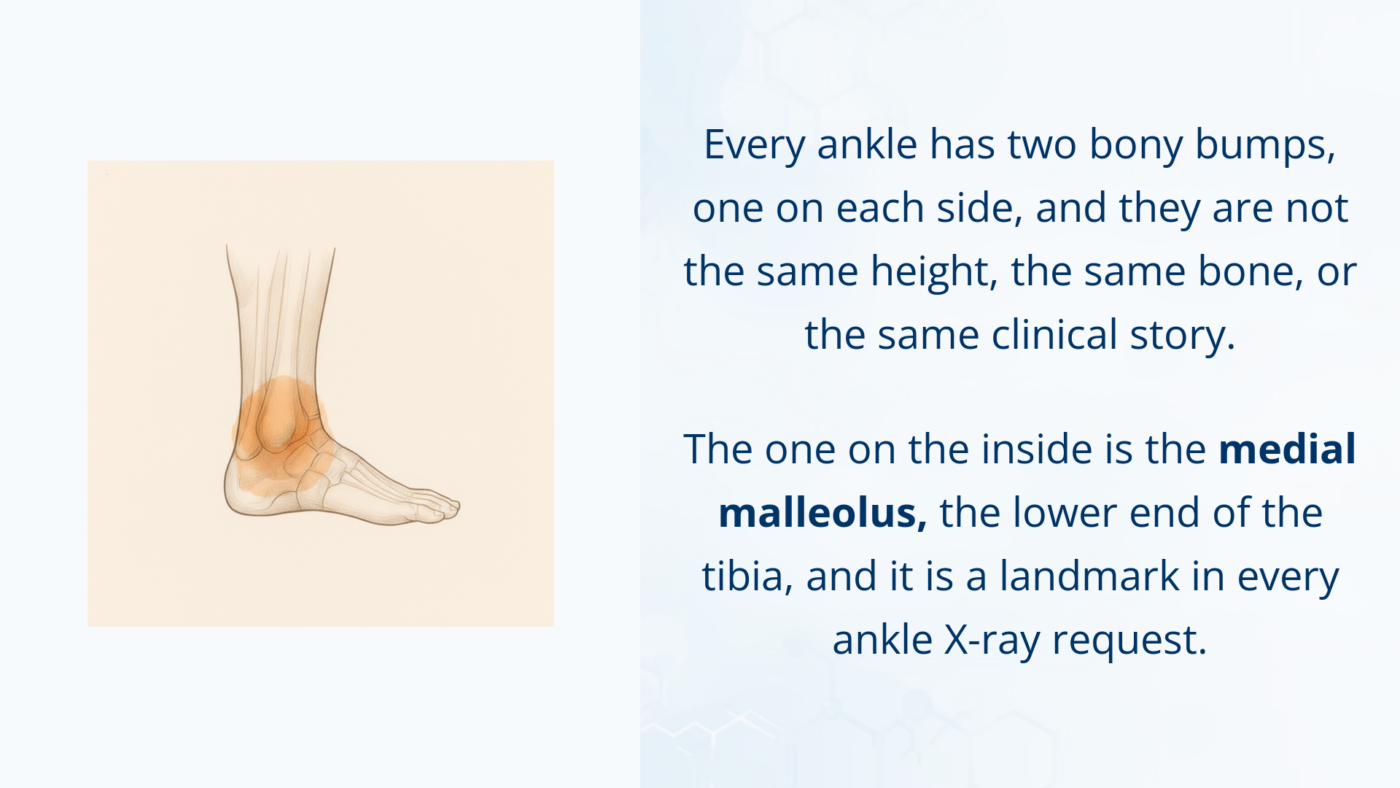
The medial malleolus is the bony bump on the inner side of the ankle, formed by the lower end of the tibia. Its partner on the outer side, the lateral malleolus, is the lower end of the fibula and sits slightly lower and further back.
Malleolus is Latin for “little hammer”, from malleus. The plural is malleoli. Medial means “towards the midline of the body”, so the medial malleolus is the one nearer the other leg.
🔍 Clinical Usage
The medial malleolus is a reference point in almost every description of the ankle:
- emergency notes on ankle injuries (the Ottawa ankle rules use tenderness over the back of each malleolus to decide whether an X-ray is needed)
- fracture descriptions (bimalleolar fracture = both bumps broken; trimalleolar adds the back of the tibia)
- vascular and wound care notes (venous ulcers typically sit just above the medial malleolus)
- the posterior tibial pulse, felt just behind the medial malleolus
Common collocations include:
- tenderness over the medial malleolus
- fracture of the medial malleolus
- ulcer above the medial malleolus
- posterior tibial pulse behind the medial malleolus
Here’s a natural clinical example:
“Bony tenderness over the posterior edge of the medial malleolus; unable to weight-bear. Ankle X-ray requested.”
→ Meaning: Pressing the back of the inner ankle bone is painful and the patient cannot stand on the foot, which meets the criteria for an X-ray.
Try OET Practice Questions for Free
Exam-style questions with every answer explained.
Listening · Reading · Writing · Speaking — No sign-up needed
🗣 Pronunciation
MEE-dee-ul muh-LEE-uh-lus — the stress in malleolus is on the second syllable. Plural: muh-LEE-uh-lye.
💡 OET Tip
Patients say “my ankle bone” and usually mean whichever bump hurts. Ask them to point, then record medial or lateral. Writing “swelling over the medial malleolus” instead of “ankle swelling” tells the reader which ligaments and which bone to think about.
🔗 Related Words
Browse every term in our Medical English Body Parts A–Z guide.
For the clinical words you will meet in the OET, with what to say to patients, see our OET Vocabulary guide.