

OET Medical Vocabulary, Word of the Day
Plantar Surface (Sole of the Foot) – Meaning and Usage in Medical English

Nov
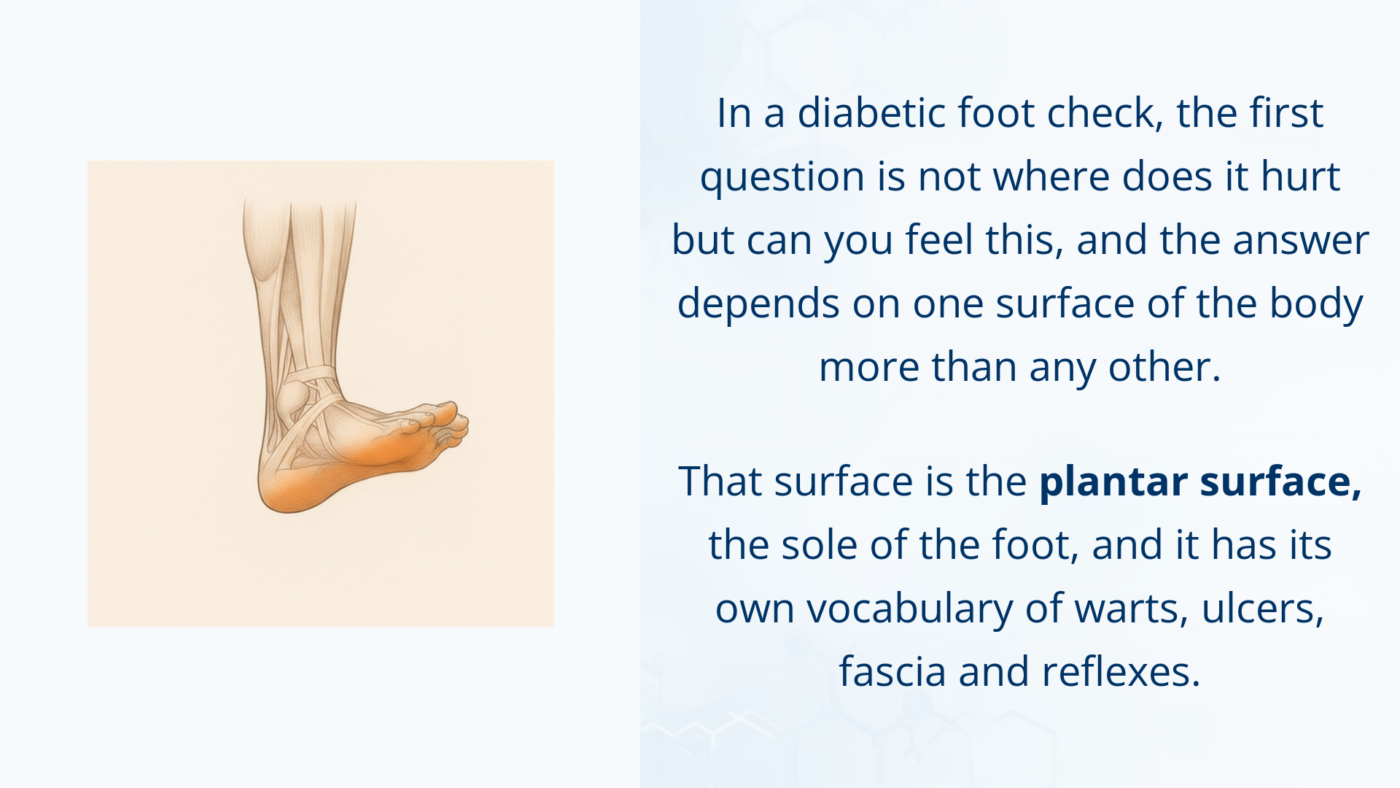
👁 What Does “Plantar Surface” Mean?
The plantar surface is the sole of the foot: the underside, from the heel to the base of the toes. It is covered by the thickest skin in the body and supported by the plantar fascia, a tough band running from the heel to the toes.
Plantar comes from Latin planta, “sole of the foot”. Its opposite is dorsal (the top of the foot). Note the spelling: plantar with an a, unlike the unrelated word planter.
🔍 Clinical Usage
The plantar surface appears across many specialties:
- plantar fasciitis — heel pain from the band of tissue under the foot
- plantar warts (verrucae) in dermatology and podiatry
- plantar ulcers in diabetic foot care, usually under the ball of the foot
- the plantar reflex (Babinski sign) in neurology, where the sole is stroked with a blunt object
- plantar flexion, the movement of pointing the foot downward
Common collocations include:
- plantar fasciitis
- plantar ulcer over the first metatarsal head
- plantar flexion / dorsiflexion
- loss of protective sensation on the plantar surface
Here’s a natural clinical example:
“Monofilament sensation absent at three of five sites on the plantar surface of the right foot; callus under the second metatarsal head.”
→ Meaning: The patient cannot feel the test filament at most points on the sole of the right foot, and there is hardened skin under the ball of the foot.
Try OET Practice Questions for Free
Exam-style questions with every answer explained.
Listening · Reading · Writing · Speaking — No sign-up needed
🗣 Pronunciation
PLAN-tar — the stress is on the first syllable, and the second syllable rhymes with car.
💡 OET Tip
Sole is fine with patients and acceptable in letters. Plantar is the adjective for structures and findings (plantar ulcer, plantar flexion) and is the form examiners expect in writing. Don’t mix up plantar flexion (foot points down) with dorsiflexion (foot pulls up).
🔗 Related Words
Browse every term in our Medical English Body Parts A–Z guide.
For the clinical words you will meet in the OET, with what to say to patients, see our OET Vocabulary guide.