

OET Medical Vocabulary, Word of the Day
Nucha (Nape of the Neck) – Meaning and Usage in Medical English
Nov
👁 What Does “Nucha” Mean?
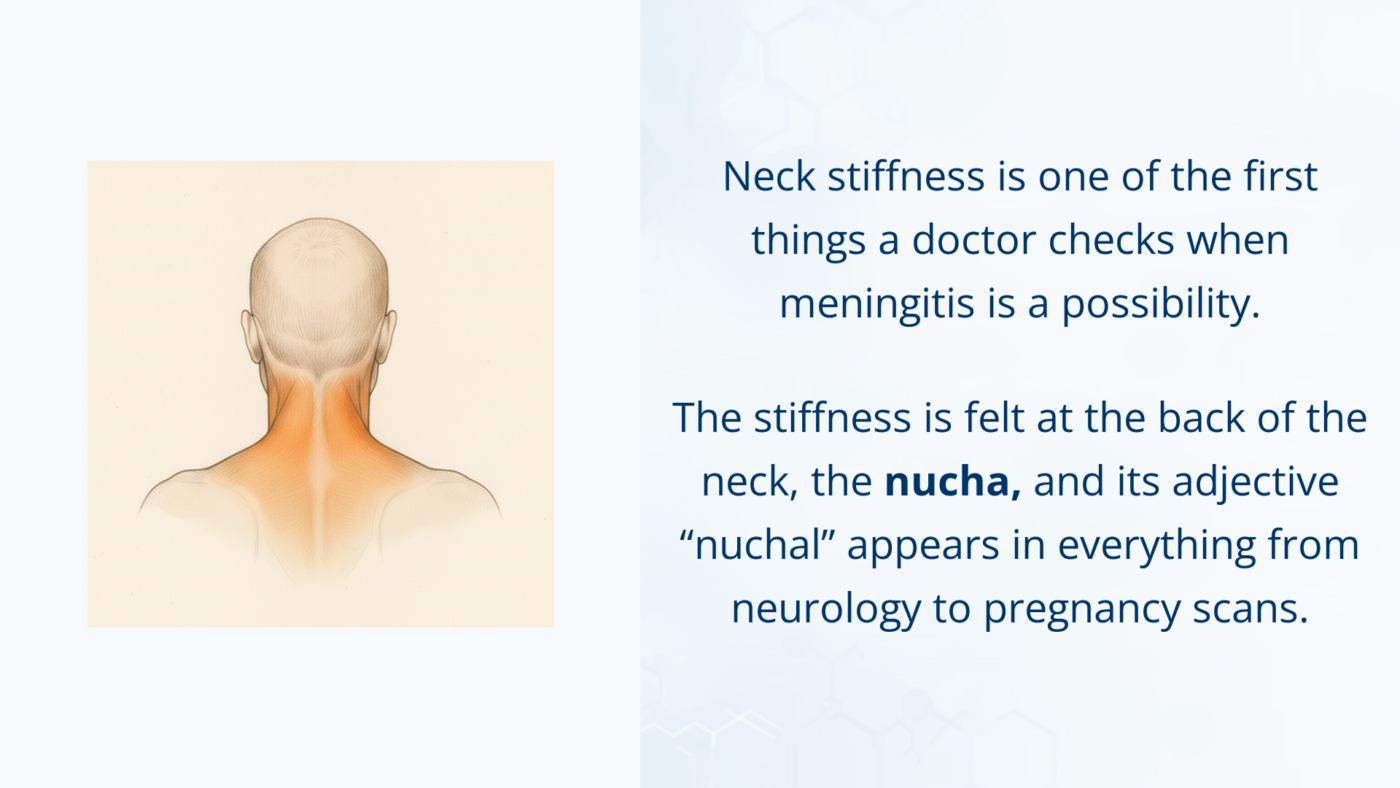
Nucha is the medical term for the nape of the neck: the back of the neck, between the base of the skull and the shoulders. It overlies the upper cervical spine and the strong muscles that hold the head upright.
The word comes from Medieval Latin nucha, borrowed from Arabic. The plural is nuchae, and the adjective is nuchal, which is far more common than the noun.
🔍 Clinical Usage
The nape and its adjective appear in neurology, emergency, obstetric and dermatology notes:
- nuchal rigidity — stiffness of the neck on flexion, a key sign in meningitis
- nuchal translucency — fluid at the back of the fetal neck measured on early pregnancy ultrasound
- nuchal cord — the umbilical cord wrapped around the baby’s neck at birth
- nuchal ligament — the strong ligament running down the back of the neck
- nuchal rash or lesion — skin findings at the back of the neck
Common collocations include:
- nuchal rigidity / neck stiffness
- nuchal translucency scan
- nuchal cord ×1 (once around the neck)
- posterior neck pain
Here’s a natural clinical example:
“Febrile, photophobic, with marked nuchal rigidity; Kernig’s sign positive.”
→ Meaning: The patient has a fever, finds light painful and has a very stiff neck, with a positive test suggesting irritation of the brain’s lining.
Try OET Practice Questions for Free
Exam-style questions with every answer explained.
Listening · Reading · Writing · Speaking — No sign-up needed
🗣 Pronunciation
NOO-kuh — the stress is on the first syllable. Nuchal is NOO-kul.
💡 OET Tip
With patients, say the back of your neck. In writing, nuchal rigidity and neck stiffness are both acceptable. Don’t confuse nuchal (back of the neck) with cervical, which refers to the neck in general or to the neck of the womb, depending on context.
🔗 Related Words
Browse every term in our Medical English Body Parts A–Z guide.
For the clinical words you will meet in the OET, with what to say to patients, see our OET Vocabulary guide.