

OET Medical Vocabulary, Word of the Day
Tragus (Flap in Front of the Ear Canal) – Meaning and Usage in Medical English
Nov
👁 What Does “Tragus” Mean?
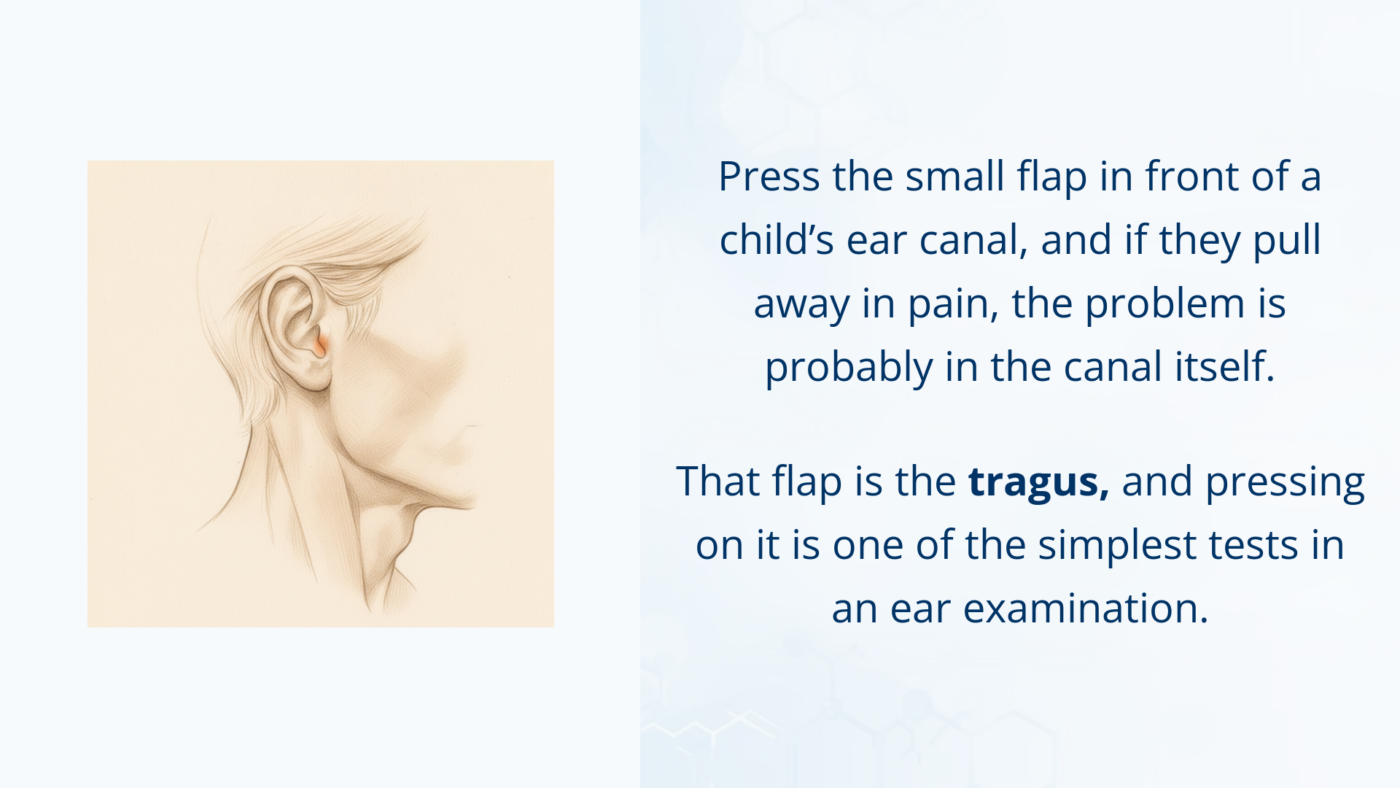
The tragus is the small flap of cartilage in front of the ear canal opening. It partly covers the entrance to the canal and can be pressed back over it with a finger.
The word comes from Greek tragos, “goat”, because hair often grows from it in older adults, like a goat’s beard. The plural is tragi, and the adjective is tragal.
🔍 Clinical Usage
The tragus appears in ENT, pediatric, primary care and cosmetic notes:
- tragal tenderness — pain on pressing the tragus, typical of otitis externa
- preauricular tag — a small extra piece of skin in front of the tragus, present from birth
- tragus piercing — a common site of cartilage infection
- tragal cartilage graft — cartilage taken from the tragus for ear or nose surgery
- pretragal tenderness — pain just in front of the tragus, over the jaw joint
Common collocations include:
- tragal tenderness
- pressure on the tragus
- anterior to the tragus
- infected tragus piercing
Here’s a natural clinical example:
“Marked tragal tenderness; external canal swollen with debris; tympanic membrane not visualized.”
→ Meaning: Pressing the flap in front of the ear causes strong pain, the ear canal is swollen and dirty, and the eardrum cannot be seen.
Try OET Practice Questions for Free
Exam-style questions with every answer explained.
Listening · Reading · Writing · Speaking — No sign-up needed
🗣 Pronunciation
TRAY-gus — the stress is on the first syllable. The plural tragi is TRAY-jye.
💡 OET Tip
With patients, describe it: the little flap in front of your ear hole. In writing, use tragus or tragal tenderness. Don’t confuse tragal tenderness (outer ear canal problem) with mastoid tenderness (behind the ear), which points to a different and more serious condition.
🔗 Related Words
Browse every term in our Medical English Body Parts A–Z guide.
For the clinical words you will meet in the OET, with what to say to patients, see our OET Vocabulary guide.