

OET Medical Vocabulary, Word of the Day
Philtrum (Groove Above the Upper Lip) – Meaning and Usage in Medical English

Nov
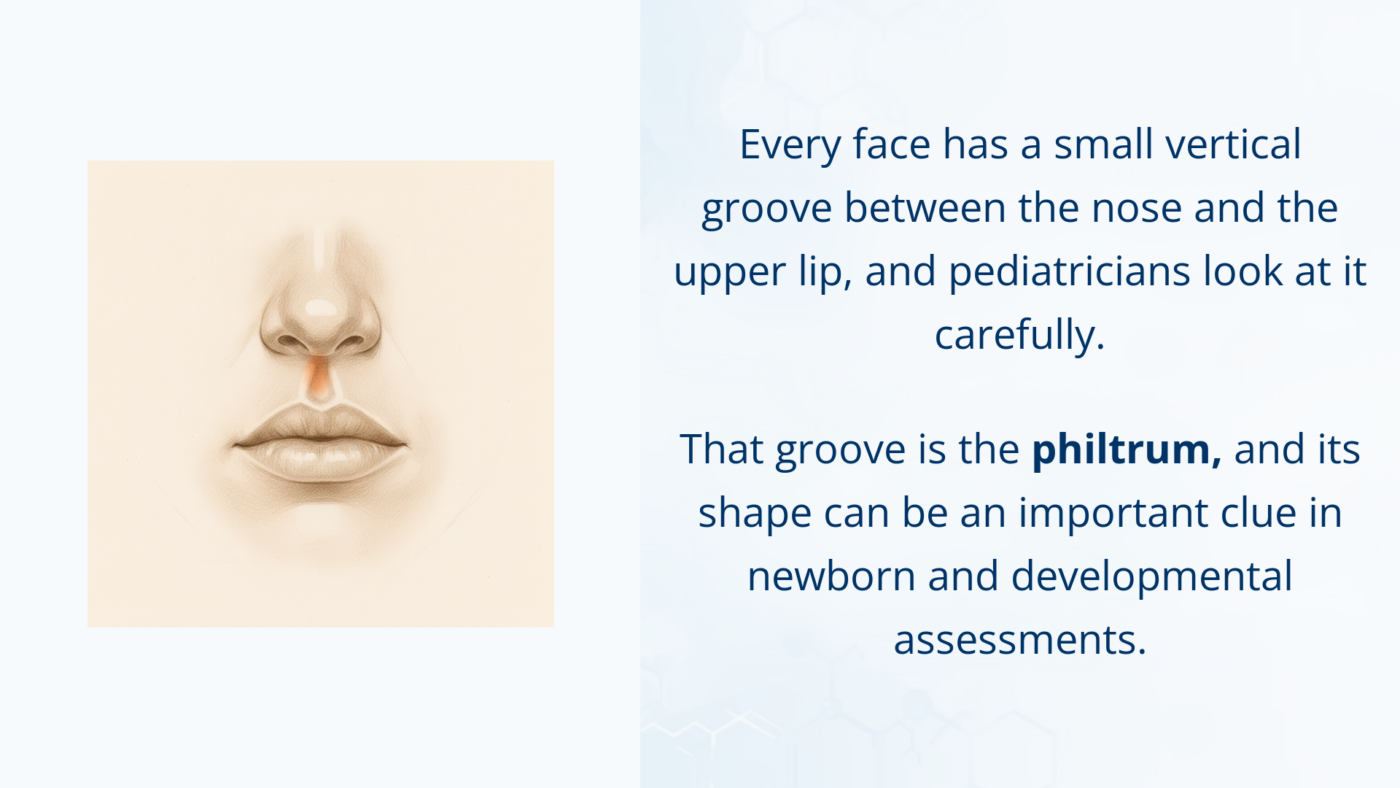
👁 What Does “Philtrum” Mean?
The philtrum is the vertical groove between the base of the nose and the upper lip. It is bordered on each side by a raised ridge, the philtral column, and it forms where the two sides of the upper lip join during development before birth.
The word comes from Greek philtron. The plural is philtra, and the adjective is philtral, as in philtral columns.
🔍 Clinical Usage
The philtrum appears in pediatric, genetics, plastic surgery and dermatology notes:
- smooth philtrum — a flat groove with weak ridges, one of the facial features of fetal alcohol spectrum disorder
- cleft lip repair — surgery aims to rebuild the philtral columns and groove
- long philtrum — a feature recorded in some genetic syndromes
- philtral laceration — a cut of the upper lip area, often in children after falls
- perioral dermatitis — a rash around the mouth that may involve the philtrum
Common collocations include:
- smooth / flat philtrum
- long philtrum
- philtral columns
- philtrum length
Here’s a natural clinical example:
“Short palpebral fissures, smooth philtrum and thin upper lip noted; referral for assessment of possible prenatal alcohol exposure.”
→ Meaning: The eye openings are small, the groove above the lip is flat, and the upper lip is thin, so the child is being referred to check for effects of alcohol before birth.
Try OET Practice Questions for Free
Exam-style questions with every answer explained.
Listening · Reading · Writing · Speaking — No sign-up needed
🗣 Pronunciation
FIL-trum — the stress is on the first syllable. Philtral is FIL-trul.
💡 OET Tip
With parents, say the groove above the upper lip. In writing, philtrum is standard. Don’t confuse the philtrum with the nasolabial fold, the line that runs from the side of the nose to the corner of the mouth.
🔗 Related Words
Browse every term in our Medical English Body Parts A–Z guide.
For the clinical words you will meet in the OET, with what to say to patients, see our OET Vocabulary guide.