

OET Medical Vocabulary, Word of the Day
Labia Oris (Lips) – Meaning and Usage in Medical English
Nov
👁 What Does “Labia Oris” Mean?
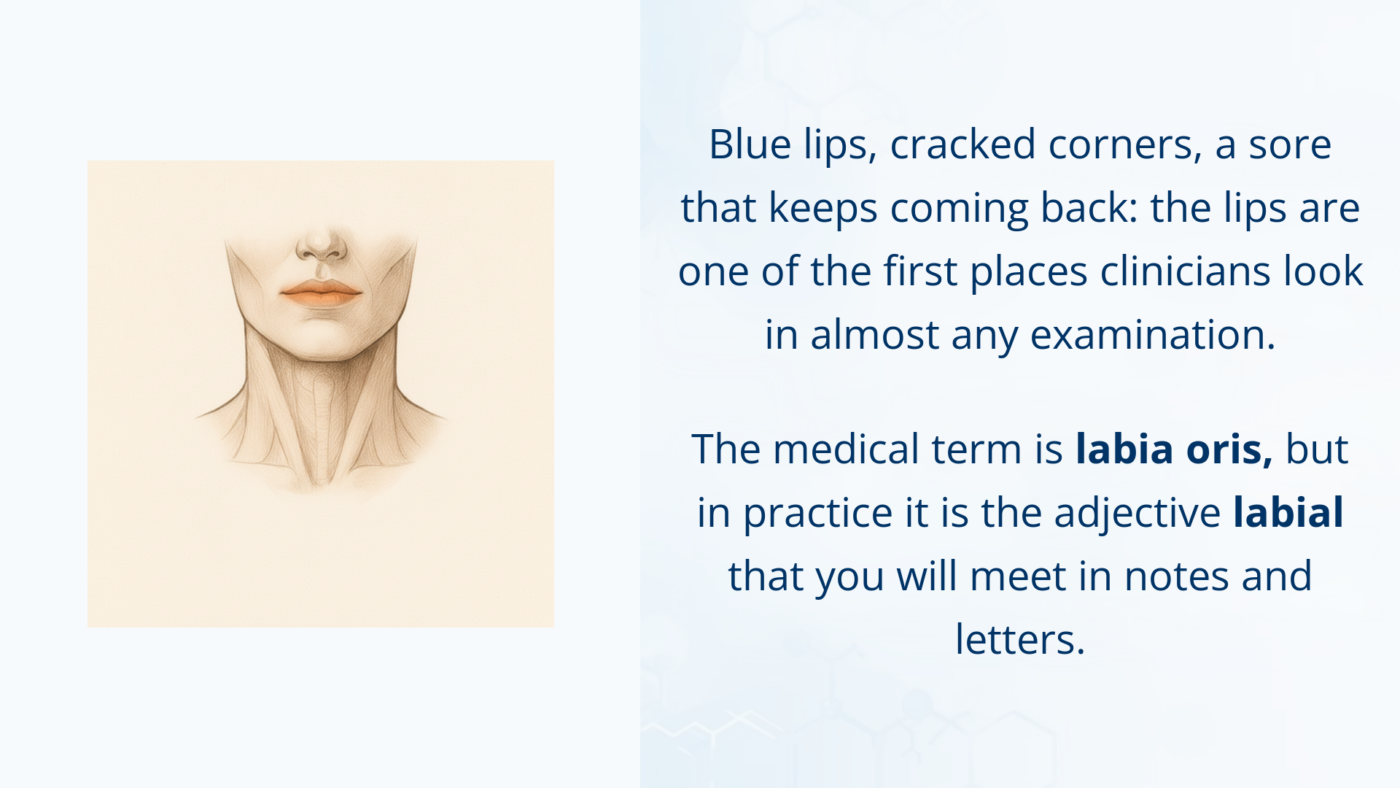
Labia oris is the medical term for the lips: the soft, movable folds that surround the opening of the mouth. The upper lip is the labium superius and the lower lip the labium inferius. The line where the red part of the lip meets the skin is the vermilion border.
The term is Latin: labium means “lip” and oris means “of the mouth”. The singular is labium, and the adjective is labial. The word perioral means “around the mouth”.
🔍 Clinical Usage
The lips appear in emergency, dermatology, pediatric and dental notes:
- central cyanosis — a blue color of the lips and tongue from low oxygen
- angular cheilitis — painful cracks at the corners of the mouth
- herpes labialis — cold sores caused by the herpes simplex virus
- angioedema of the lips — sudden swelling, which may be part of an allergic reaction
- lip laceration — a cut that needs careful alignment of the vermilion border
Common collocations include:
- upper / lower lip
- lip swelling
- dry, cracked lips
- perioral numbness
Here’s a natural clinical example:
“Marked swelling of the upper and lower lips two weeks after starting an ACE inhibitor; no stridor.”
→ Meaning: Both lips became very swollen after the patient started a blood pressure medicine, but there is no noisy breathing to suggest the airway is affected.
Try OET Practice Questions for Free
Exam-style questions with every answer explained.
Listening · Reading · Writing · Speaking — No sign-up needed
🗣 Pronunciation
LAY-bee-uh OR-is — the stress is on the first syllable of each word. Labial is LAY-bee-ul.
💡 OET Tip
In speaking and in most writing, simply say lips; labia oris is rarely written in full. Use labial and perioral in formal descriptions. Write cheilitis for inflammation of the lips, and don’t confuse it with gingivitis, which affects the gums.
🔗 Related Words
Browse every term in our Medical English Body Parts A–Z guide.
For the clinical words you will meet in the OET, with what to say to patients, see our OET Vocabulary guide.