

OET Medical Vocabulary, Word of the Day
Hypothenar Eminence (Pinky Side of the Palm) – Meaning and Usage in Medical English
Nov
👁 What Does “Hypothenar Eminence” Mean?
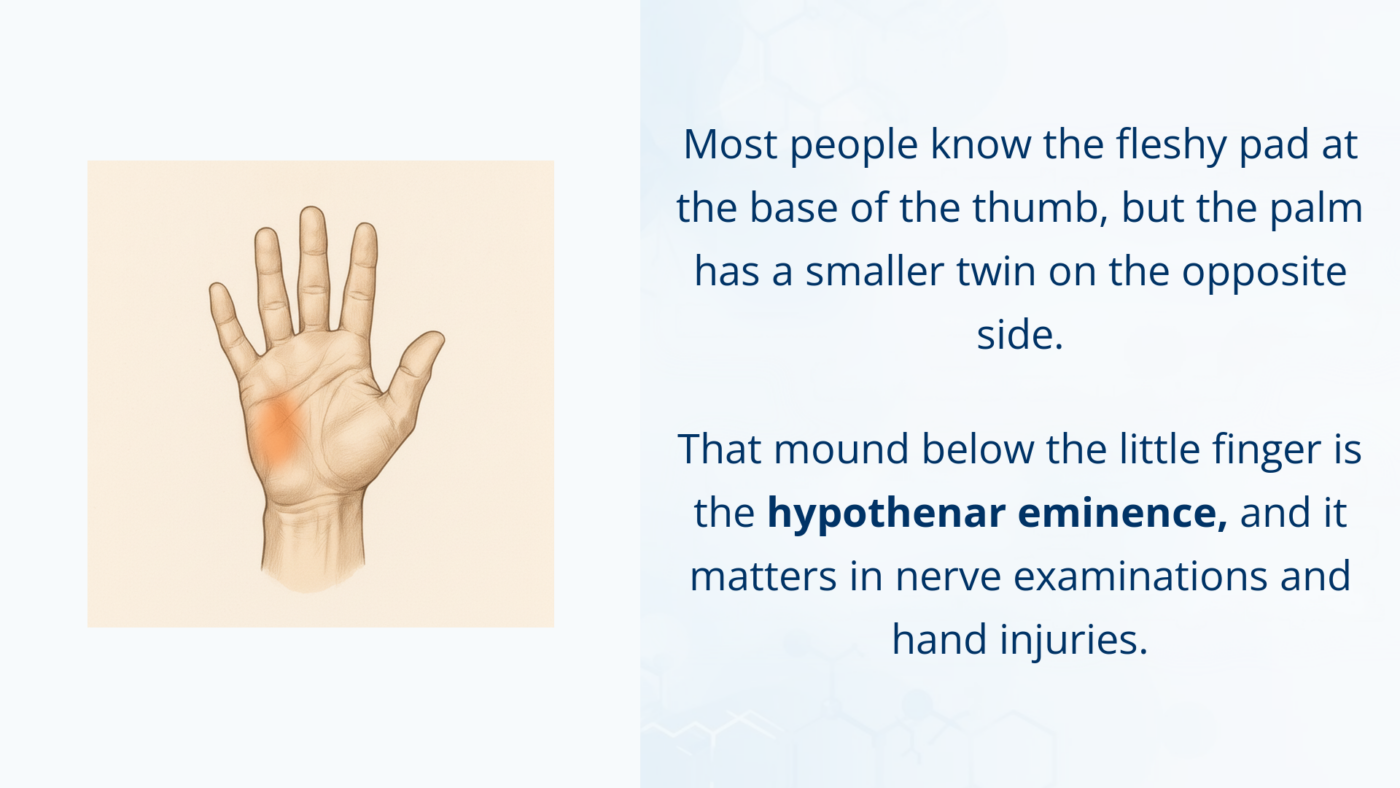
The hypothenar eminence is the fleshy mound on the little-finger side of the palm. It is formed by three small muscles that move the little finger, and it is supplied by the ulnar nerve.
Hypothenar comes from Greek: hypo, “below”, and thenar, “palm”. Eminence means a raised area. The plural is hypothenar eminences, and the adjective is simply hypothenar, as in hypothenar muscles.
🔍 Clinical Usage
The hypothenar eminence appears in neurology, hand surgery and emergency notes:
- hypothenar wasting — muscle loss suggesting ulnar nerve damage
- ulnar nerve compression — at the elbow or wrist, causing numbness of the little finger
- hypothenar hammer syndrome — artery damage from using the palm as a hammer
- boxer’s fracture — a break of the fifth metacarpal, with swelling near this area
Common collocations include:
- thenar and hypothenar muscles
- hypothenar wasting
- sensation over the hypothenar eminence
- bruising of the hypothenar region
Here’s a natural clinical example:
“Hypothenar wasting with reduced sensation in the little finger; nerve conduction studies requested.”
→ Meaning: The muscles on the little-finger side of the palm have shrunk and feeling is reduced, so tests of nerve function have been ordered.
Try OET Practice Questions for Free
Exam-style questions with every answer explained.
Listening · Reading · Writing · Speaking — No sign-up needed
🗣 Pronunciation
hy-poh-THEE-nar EM-ih-nuns — stress THEE in hypothenar.
💡 OET Tip
With patients, say the outer edge of your palm or the pad below your little finger. In writing, hypothenar eminence is standard. Don’t confuse it with the thenar eminence, the larger mound at the base of the thumb, supplied mainly by the median nerve.
🔗 Related Words
Browse every term in our Medical English Body Parts A–Z guide.
For the clinical words you will meet in the OET, with what to say to patients, see our OET Vocabulary guide.