

OET Medical Vocabulary, Word of the Day
Clavicle (Collarbone) – Meaning and Usage in Medical English
Nov
👁 What Does “Clavicle” Mean?
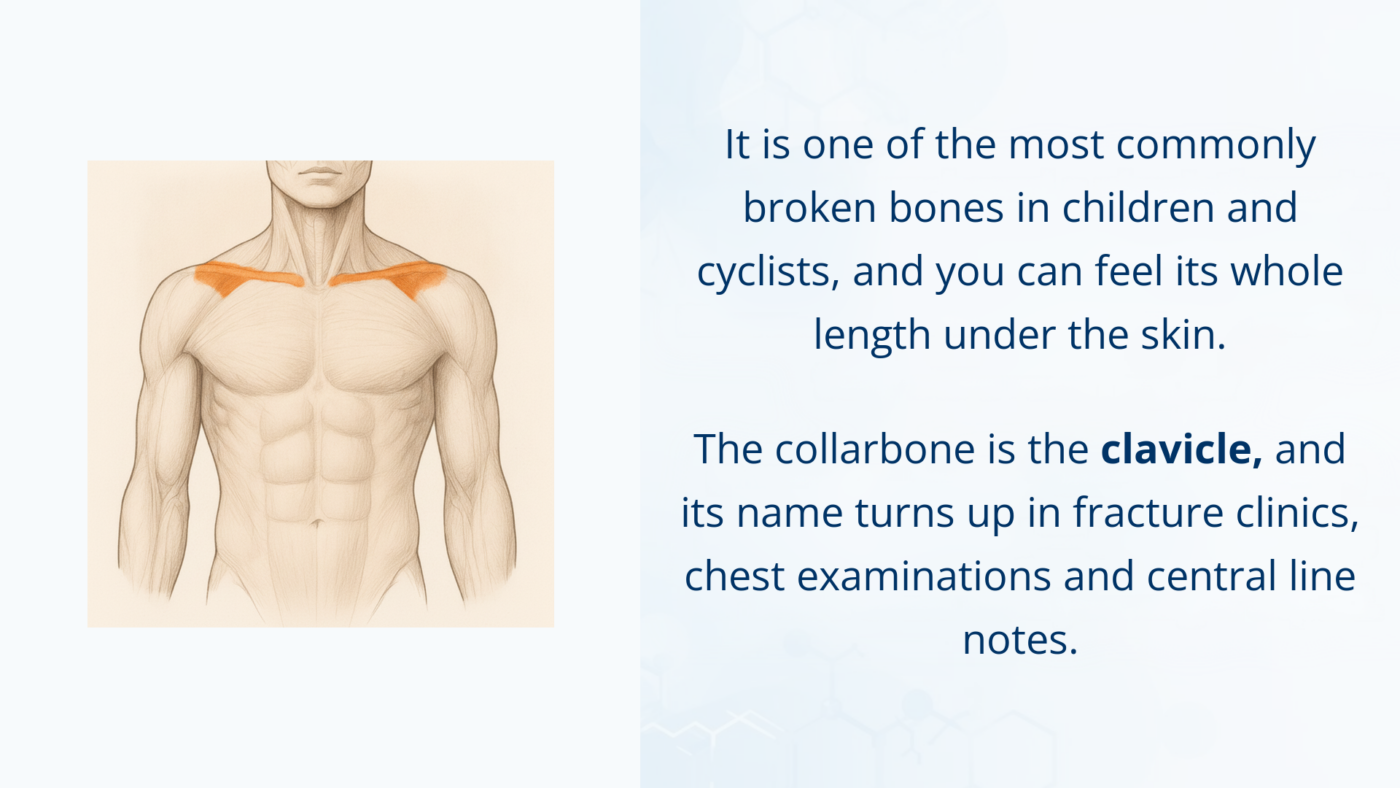
The clavicle is the collarbone: the long, slightly S-shaped bone that runs horizontally from the top of the breastbone to the point of the shoulder. It acts as a strut that holds the shoulder away from the chest and connects the arm to the trunk.
The word comes from Latin clavicula, “little key”. The plural is clavicles, and the adjective is clavicular, as in midclavicular line and supraclavicular fossa.
🔍 Clinical Usage
The clavicle appears in orthopedic, emergency, respiratory and anesthetic notes:
- clavicle fracture — often from a fall onto the shoulder or an outstretched hand
- acromioclavicular (AC) joint injury — damage where the clavicle meets the acromion
- midclavicular line — a vertical line used to locate the heart apex and liver edge
- subclavian vessels — the artery and vein running beneath the clavicle
- supraclavicular lymph nodes — glands above the clavicle checked in cancer assessment
Common collocations include:
- midshaft clavicle fracture
- tenderness over the clavicle
- sling for comfort
- subclavian central line
Here’s a natural clinical example:
“Deformity and point tenderness over the midshaft of the right clavicle; distal neurovascular status intact.”
→ Meaning: The right collarbone looks out of shape and is painful in the middle, but the nerves and blood supply to the arm are normal.
Try OET Practice Questions for Free
Exam-style questions with every answer explained.
Listening · Reading · Writing · Speaking — No sign-up needed
🗣 Pronunciation
KLAV-ih-kul — the stress is on the first syllable.
💡 OET Tip
With patients, say collarbone. In writing, clavicle is standard in fracture and imaging contexts. Don’t confuse clavicle (collarbone) with scapula (shoulder blade), and remember that subclavian means beneath the clavicle, not beside it.
🔗 Related Words
Browse every term in our Medical English Body Parts A–Z guide.
For the clinical words you will meet in the OET, with what to say to patients, see our OET Vocabulary guide.