

OET Medical Vocabulary, Word of the Day
Areola (Ring Around the Nipple) – Meaning and Usage in Medical English

Nov
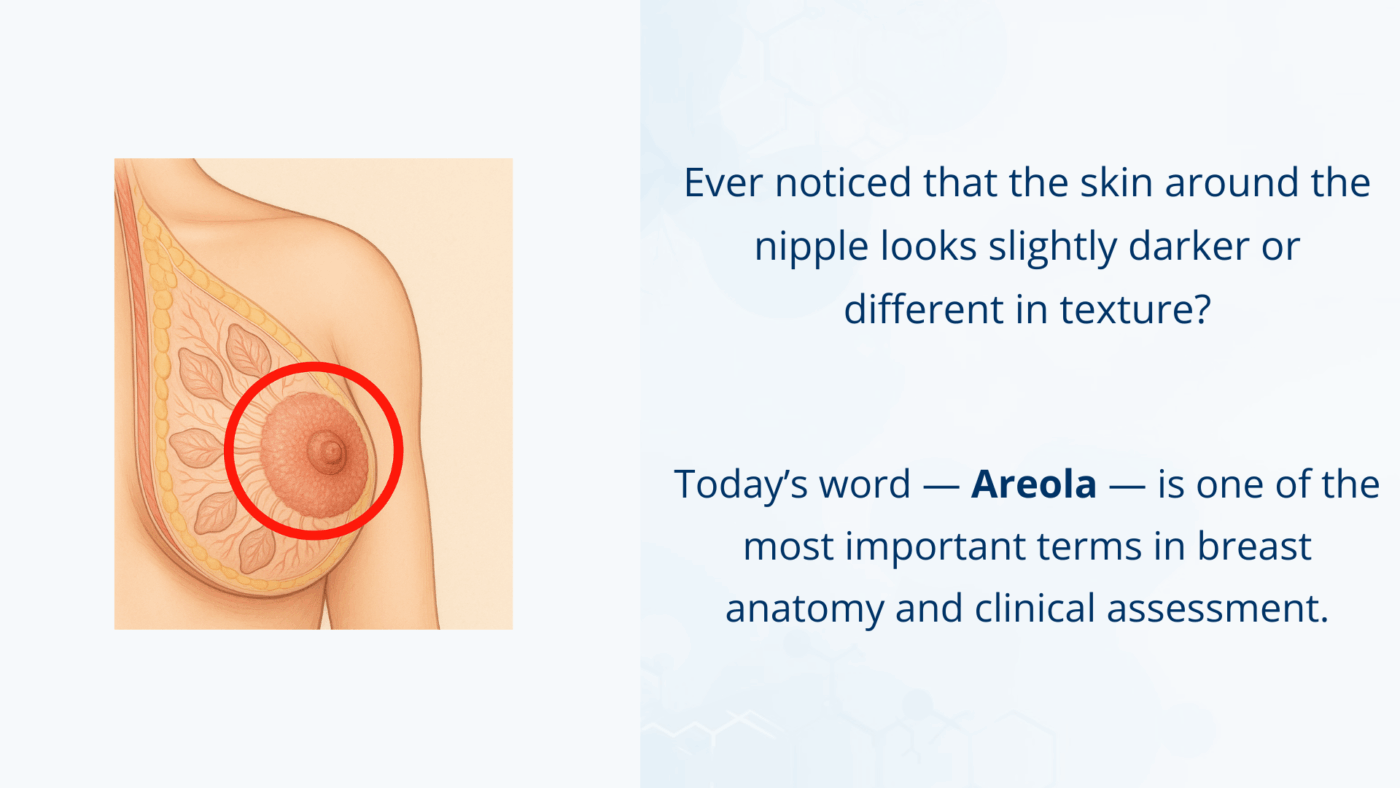
The areola is the circular area of darker, pigmented skin that surrounds the nipple on the breast.
👁 What Does “Areola” Mean?
The areola is the circular, pigmented area of skin that surrounds the nipple.
The term comes from the Latin word areola, meaning “small open space” or “little area.”
In medicine, it refers specifically to this distinct anatomical region, noted for its color, texture, and role in breastfeeding.
Healthcare professionals use the term in breast examinations, dermatological assessments, obstetric care, and documentation.
🔍 Clinical Usage
In clinical settings, areola appears frequently in breast exams, patient assessments, nursing notes, dermatology reports, and obstetric records.
Healthcare professionals may describe changes in the areola’s color, size, texture, or sensitivity, especially during pregnancy, lactation, or in cases of dermatological or infectious conditions.
Common contexts include:
- Describing pigmentation changes (e.g., during pregnancy or hormonal shifts)
- Noting skin conditions such as eczema, dermatitis, or inflammation
- Documenting symptoms such as itching, swelling, or pain
- Assessing for possible infection or mastitis in breastfeeding patients
Here’s a simple clinical-style example sentence:
“Mild erythema noted around the areola, likely due to irritation.”
Try OET Practice Questions for Free
Exam-style questions with every answer explained.
Listening · Reading · Writing · Speaking — No sign-up needed
🎥 Watch the Short Video
👉 Watch our 25-second clip: Areola – Learn how to pronounce it and remember how it’s used in real medical English.
🔗 Related Words
- Chest (Thorax)
- Nipple (Mammary Papilla)
- Jugular Notch (Sternal Notch)
- Supraclavicular Fossa (Hollow Above the Collarbone)
Browse every term in our Medical English Body Parts A–Z guide.