

OET Medical Vocabulary, Word of the Day
Patella (Kneecap) – Meaning and Usage in Medical English

Nov
👁 What Does “Patella” Mean?
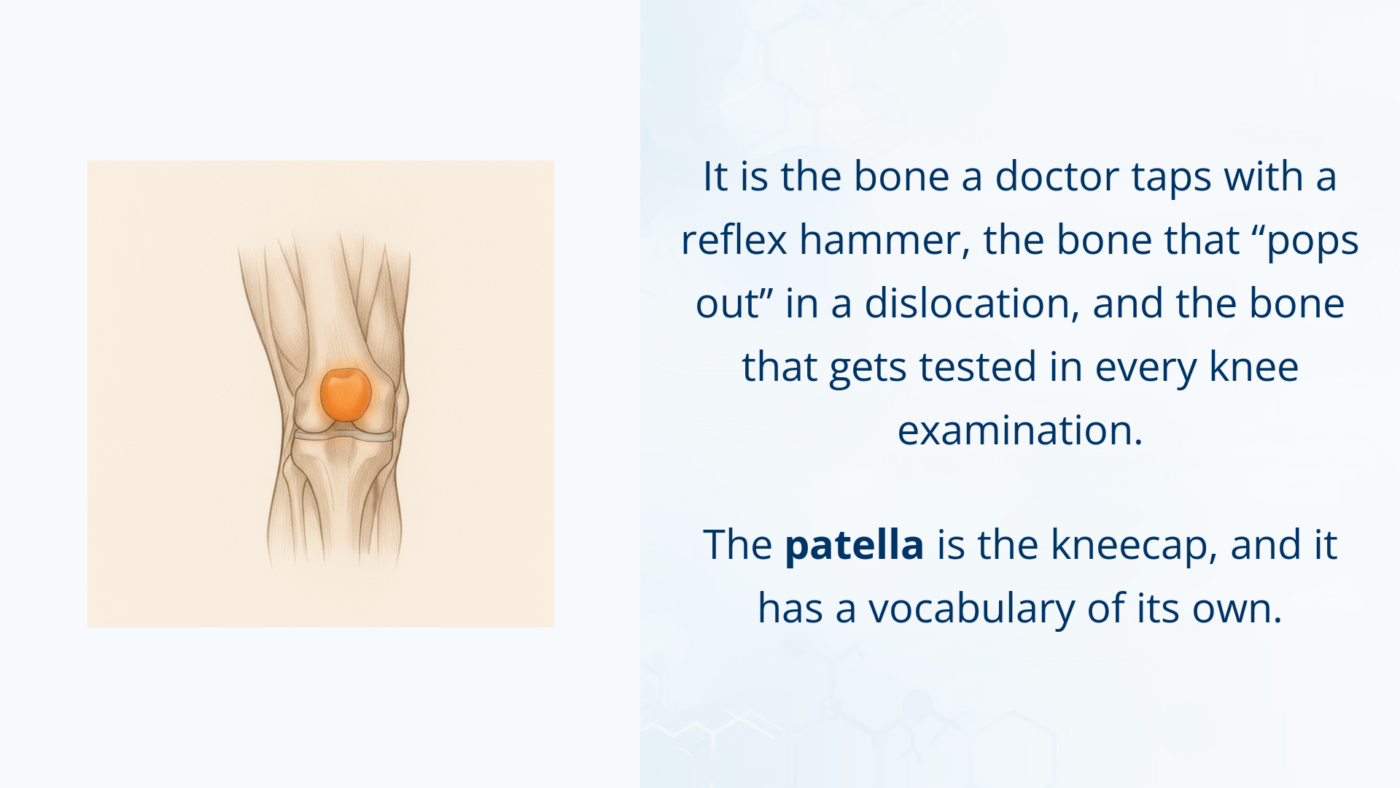
The patella is the kneecap: the small, roughly triangular bone that sits at the front of the knee joint. It is embedded in the tendon of the quadriceps muscle and glides in a groove on the front of the femur when the knee bends and straightens.
The word is Latin for “small pan” or “small dish”, from patina. The plural is patellae, and the adjective is patellar, as in patellar tendon and patellar reflex.
🔍 Clinical Usage
The patella appears in orthopedic, emergency, sports medicine and physiotherapy notes:
- patellar dislocation — the kneecap slips sideways, usually outward, often in teenagers
- patellar fracture — typically from a direct blow or fall onto the knee
- patellofemoral pain syndrome — pain at the front of the knee, common in runners
- patellar tendinopathy — “jumper’s knee”, pain just below the kneecap
- patellar reflex — the knee-jerk reflex tested with a tendon hammer
Common collocations include:
- patellar tendon
- patellar tap (a test for fluid in the knee)
- lateral patellar dislocation
- tenderness at the inferior pole of the patella
Here’s a natural clinical example:
“Positive patellar tap; tenderness along the medial border of the patella.”
→ Meaning: There is fluid in the knee joint, and the inner edge of the kneecap is painful to press.
Try OET Practice Questions for Free
Exam-style questions with every answer explained.
Listening · Reading · Writing · Speaking — No sign-up needed
🗣 Pronunciation
puh-TEL-uh — the stress is on the second syllable. Patellar is puh-TEL-er.
💡 OET Tip
In speaking, always say kneecap; patella will mean nothing to most patients. In writing, patella is standard, and the adjective patellar goes with structures and tests. Don’t confuse the patellar tendon (below the kneecap) with the quadriceps tendon (above it).